Schlachet, Joshua Editor
Biography not available.

Browse all FOLKLORE books
Browse all GARDENS books
Browse all GRAPHIC NOVELS books
Browse all HISTORY - MEDIEVAL books
Browse all HUMOUR books
Browse all Juvenile Fiction : Biographical - Other books
Browse all Juvenile Fiction : Historical - Other books
Browse all Juvenile Fiction : Legends, Myths, & Fables - Other books
Browse all Juvenile Fiction : People & Places - Other books
Browse all Juvenile Fiction : People & Places - United States - Other books
Browse all Juvenile Fiction : Religious - Other books
Browse all Juvenile Nonfiction : History - Other books
Browse all Juvenile Nonfiction : Mathematics - Advanced books
Browse all Juvenile Nonfiction : People & Places - Other books
Browse all Juvenile Nonfiction : People & Places - United States - Othe books
Browse all LITERARY STUDIES books
Browse all LONDON books
Browse all Medical : Nursing - Mental Health books
Browse all MIND books
Browse all MUSEOLOGY books
Browse all NON-CLASSIFIABLE books
Browse all NONLINEAR SCIENCE books
Browse all POPULAR SCIENCE books
Browse all RELIGIOUS STUDIES books
Browse all SPIRIT books
Browse all SPORT books
Browse all TRAVEL WRITING books
 Out of Stock
Hardback · ISBN 9781032268019
Inclusive of GST and other taxes
Arriving at your doorstep in 10-15 days
Our logisitcs team will make sure everyitem is delivered safely
| ISBN | 9781032268019 |
|---|---|
| Publisher | Routledge |
| Publication date | July 2024 |
| Language | English |
| MRP | £171.99 GBP |
| Page count | 278 |
| Item weight | 125 g |
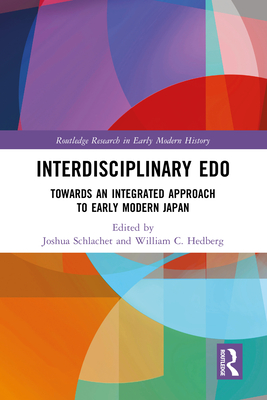
Interdisciplinary Edo brings together scholars from across the methodological spectrum to explore new approaches to innovative humanistic research on early modern Japan (1603-1868). It makes an intervention in the field by thinking across conventional disciplinary boundaries toward a holistic and cohesive approach to Japan's early modern period. By taking historical, religious, literary, and art historical analyses into account, the contributors hope to begin a new, transdisciplinary conversation on political formation, social interaction, and cultural proliferation under the "Great Peace" of the Tokugawa regime.
This book comprises 14 essays by specialists of history, literature, religious studies, and art history. Major topics include Edo-period Japan's cultural, intellectual, and economic connections to the early modern world; environmental humanities and material culture; popular culture and aesthetics; and the question of how contemporary academic demarcation lines impact the current study of Tokugawa Japan. Individual essays range in scale from individual paintings and works of prose fiction to the tectonic plates underlying the Yamashiro basin and span topics from overseas medicinal exchange and premodern cartography to the history of intoxication.
Interdisciplinary Edo will be of immediate interest to all scholars focusing on the early modern period, as well as to researchers studying other periods of Japanese studies. As part of an ongoing and inclusive process of pluralizing and deprovincializing global conceptions of early modernity, this book will contribute to historiographical interventions outside Japan studies as well.
Log in to write a review for this book.
No reviews yet. Be the first to share your opinion.
Biography not available.
Biography not available.