Posteuca, Alin Author
Biography not available.

Browse all FOLKLORE books
Browse all GARDENS books
Browse all GRAPHIC NOVELS books
Browse all HISTORY - MEDIEVAL books
Browse all HUMOUR books
Browse all Juvenile Fiction : Biographical - Other books
Browse all Juvenile Fiction : Historical - Other books
Browse all Juvenile Fiction : Legends, Myths, & Fables - Other books
Browse all Juvenile Fiction : People & Places - Other books
Browse all Juvenile Fiction : People & Places - United States - Other books
Browse all Juvenile Fiction : Religious - Other books
Browse all Juvenile Nonfiction : History - Other books
Browse all Juvenile Nonfiction : Mathematics - Advanced books
Browse all Juvenile Nonfiction : People & Places - Other books
Browse all Juvenile Nonfiction : People & Places - United States - Othe books
Browse all LITERARY STUDIES books
Browse all LONDON books
Browse all Medical : Nursing - Mental Health books
Browse all MIND books
Browse all MUSEOLOGY books
Browse all NON-CLASSIFIABLE books
Browse all NONLINEAR SCIENCE books
Browse all POPULAR SCIENCE books
Browse all RELIGIOUS STUDIES books
Browse all SPIRIT books
Browse all SPORT books
Browse all TRAVEL WRITING books
 Out of Stock
Paperback · ISBN 9781032330358
Inclusive of GST and other taxes
Arriving at your doorstep in 10-15 days
Our logisitcs team will make sure everyitem is delivered safely
| ISBN | 9781032330358 |
|---|---|
| Publisher | Productivity Press |
| Publication date | February 2023 |
| Language | English |
| MRP | £40.99 GBP |
| Page count | 306 |
| Item weight | 91 g |
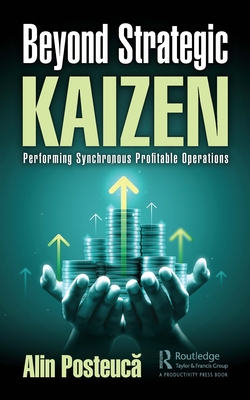
Currently, the challenge for manufacturing organizations is how to achieve their expected profit by continuously improving productivity or reducing costs. Manufacturing organizations have been using different improvement approaches to achieving cost reduction and productivity improvement for years by eliminating various losses and waste structures, such as excess inventory, excessive workforce, excessive capacity, excessive utility consumption, and so on. But is the problem solved? Unfortunately, no! Often manufacturing companies focus on maximizing the flow and meeting customer needs but forget their real aim - to make a profit for their stakeholders. Too many organizations meet customer expectations by seeking to continuously synchronize the flow to market demand but forget to check that they are doing it profitably enough to ensure business continuity and prosperity. When the financial results show that they are not so profitable, it is already too late. Moreover, the strategic direction of systematic improvements according to the sales trend - depending on the current degree of production capacity utilization and its dynamic effects on cost structures - is deficient in many manufacturing companies. So, would the failure of strategic and profitable systematic improvements be an option? Of course not!
If the ultimate goal of the organization is to create target profit for stakeholders, then the behavior and strategic systematic improvements must be directed to those scenarios, strategies, tasks, problems, and "production levers" that are best based on creating the target profit. That's what Strategic Kaizen thinking does - the simultaneous and consistent achievement of systematic operational and financial improvements in a strategic and operational manner. It achieves both synchronous operations at market demand by fulfilling takt time and profitable operations in accordance with profit demand by fulfilling takt profit. In short, the Strategic Kaizen mission is striving for the fulfillment of the ideal state of operations called synchronous profitable operations. In this book, the author, while presenting in detail the seven processes of Strategic Kaizen methodology, exposes the answer to historically incomplete thinking of productivity improvements for target profitability. The uniqueness of the book is reinforced by the detailed presentation of the successful application of the Strategic Kaizen thinking over the years in two multinational manufacturing organizations operating in highly competitive markets, addressing the synchronous profitable operations for both the sales increase scenario and the sales decrease scenario. Moreover, it presents examples of the practical application of the "white-collar" Strategic Kaizen.
Essentially, by adopting the Strategic Kaizen methodology presented in detail in this book to consistently achieve the ideal state of a manufacturing organization, organizations will enter a new paradigm of thinking of strategic improvements - Strategic Kaizen thinking - to meet annual and multiannual target profits in a unique and effective way that operates according to its own strategic and operational management system.
Log in to write a review for this book.
No reviews yet. Be the first to share your opinion.
Biography not available.