Messina, Karyne E. Author
Biography not available.

Browse all FOLKLORE books
Browse all GARDENS books
Browse all GRAPHIC NOVELS books
Browse all HISTORY - MEDIEVAL books
Browse all HUMOUR books
Browse all Juvenile Fiction : Biographical - Other books
Browse all Juvenile Fiction : Historical - Other books
Browse all Juvenile Fiction : Legends, Myths, & Fables - Other books
Browse all Juvenile Fiction : People & Places - Other books
Browse all Juvenile Fiction : People & Places - United States - Other books
Browse all Juvenile Fiction : Religious - Other books
Browse all Juvenile Nonfiction : History - Other books
Browse all Juvenile Nonfiction : Mathematics - Advanced books
Browse all Juvenile Nonfiction : People & Places - Other books
Browse all Juvenile Nonfiction : People & Places - United States - Othe books
Browse all LITERARY STUDIES books
Browse all LONDON books
Browse all Medical : Nursing - Mental Health books
Browse all MIND books
Browse all MUSEOLOGY books
Browse all NON-CLASSIFIABLE books
Browse all NONLINEAR SCIENCE books
Browse all POPULAR SCIENCE books
Browse all RELIGIOUS STUDIES books
Browse all SPIRIT books
Browse all SPORT books
Browse all TRAVEL WRITING books
 Out of Stock
Hardback · ISBN 9781041297727
Inclusive of GST and other taxes
Arriving at your doorstep in 10-15 days
Our logisitcs team will make sure everyitem is delivered safely
| ISBN | 9781041297727 |
|---|---|
| Publisher | Routledge |
| Publication date | June 2026 |
| Language | English |
| MRP | £67.99 GBP |
| Page count | 74 |
| Item weight | 63 g |
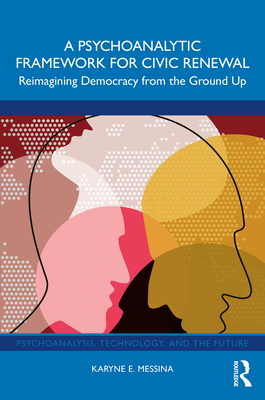
A Psychoanalytic Framework for Civic Renewal: Reimagining Democracy from the Ground Up offers a compelling and original thesis: that the global crisis of democracy is not a purely political or economic problem but a deeply rooted psychological and relational one.
The book synthesizes key psychoanalytic and psychological concepts to argue that the health of a democracy is directly tied to the citizenry's capacity for mentalization--the foundational ability to understand ourselves and others in terms of our inner thoughts, feelings, and intentions. It methodically builds its argument, beginning with the developmental origins of mentalization in infancy and linking it to attachment theory and the cognitive function of theory of mind. It then expands this framework to the societal level, demonstrating how a collective failure to mentalize leads to the collapse of epistemic trust and a dangerous regression to primitive psychological defenses like splitting and "us vs. them" thinking. The work presents a powerful, integrated solution: a new educational model that cultivates not only mentalization and its core social-emotional skills but also the complementary intellectual capacity for critical thinking.
This book serves as a vital resource for educators, policy makers, and mental health professionals, offering an interdisciplinary framework that bridges the divide between abstract political theory and practical, psychological solutions.
Log in to write a review for this book.
No reviews yet. Be the first to share your opinion.
Biography not available.