Taheri, Mohammad Ali Author
Biography not available.

Browse all FOLKLORE books
Browse all GARDENS books
Browse all GRAPHIC NOVELS books
Browse all HISTORY - MEDIEVAL books
Browse all HUMOUR books
Browse all Juvenile Fiction : Biographical - Other books
Browse all Juvenile Fiction : Historical - Other books
Browse all Juvenile Fiction : Legends, Myths, & Fables - Other books
Browse all Juvenile Fiction : People & Places - Other books
Browse all Juvenile Fiction : People & Places - United States - Other books
Browse all Juvenile Fiction : Religious - Other books
Browse all Juvenile Nonfiction : History - Other books
Browse all Juvenile Nonfiction : Mathematics - Advanced books
Browse all Juvenile Nonfiction : People & Places - Other books
Browse all Juvenile Nonfiction : People & Places - United States - Othe books
Browse all LITERARY STUDIES books
Browse all LONDON books
Browse all Medical : Nursing - Mental Health books
Browse all MIND books
Browse all MUSEOLOGY books
Browse all NON-CLASSIFIABLE books
Browse all NONLINEAR SCIENCE books
Browse all POPULAR SCIENCE books
Browse all RELIGIOUS STUDIES books
Browse all SPIRIT books
Browse all SPORT books
Browse all TRAVEL WRITING books
 Out of Stock
Paperback · ISBN 9781068037801
Inclusive of GST and other taxes
Arriving at your doorstep in 10-15 days
Our logisitcs team will make sure everyitem is delivered safely
| ISBN | 9781068037801 |
|---|---|
| Publisher | Interuniversal Press |
| Publication date | August 2026 |
| Language | English |
| MRP | £14.99 GBP |
| Page count | 32 |
| Item weight | 23 g |
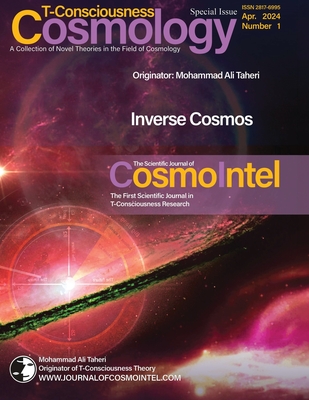
The Big Bang Model is the most widely accepted cosmological model regarding the origin of the universe,
resting on two fundamental assumptions: one is Einstein's theory of general relativity, describing the
gravitational interaction of matter with space-time, and the other is the cosmological principle, stating that
an observer viewing the universe will be faced with homogeneity and isotropy, meaning that the universe has
no edge. According to this model, one cannot seek a specific point of origin of the big bang, as this explosion
occurred simultaneously throughout the whole universe. Through the evolution of various cosmological
models, the Standard Cosmological Model (Lambda-CDM) also assumes that the universe consists of three
main components: 1. A cosmological constant associated with dark energy, 2. Cold dark matter, and 3. Ordinary
matter. From the perspective of cosmologists, this model provides a general explanation for a wide range of
observed phenomena, including the abundance of light elements, cosmic microwave background radiation, and
large-scale structures in the universe. However, there still exist aspects of the observed universe that currently
pose challenges not explained by the big bang model. In response to these challenges, "T-Consciousness
Cosmology" proposes multiple hypotheses, offering not only a new interpretative angle on the behavior and
function of the components of the cosmos, but also stating that the latest cosmological models have paradoxes
relative to the observations made. T-Consciousness Cosmology asserts that if we accept the prevalent models
of cosmology, we are then faced with illogical manifestations of an expanding universe. In this discussion,
several reasons are presented under the concept of an "Inverse Cosmos," challenging certain interpretations of
the standard cosmological model or the latest big bang model regarding the origin of the cosmos, its geometric
shape, and the stages accepted by most cosmologists for cosmic expansion. These challenges include issues
such as the Density Obscurity Horizon for Matter and Energy, the Thermal Obscurity Horizon, the Timelessness
Horizon, and others.
Log in to write a review for this book.
No reviews yet. Be the first to share your opinion.
Biography not available.