Hassan, Fatima Author
Biography not available.

Browse all FOLKLORE books
Browse all GARDENS books
Browse all GRAPHIC NOVELS books
Browse all HISTORY - MEDIEVAL books
Browse all HUMOUR books
Browse all Juvenile Fiction : Biographical - Other books
Browse all Juvenile Fiction : Historical - Other books
Browse all Juvenile Fiction : Legends, Myths, & Fables - Other books
Browse all Juvenile Fiction : People & Places - Other books
Browse all Juvenile Fiction : People & Places - United States - Other books
Browse all Juvenile Fiction : Religious - Other books
Browse all Juvenile Nonfiction : History - Other books
Browse all Juvenile Nonfiction : Mathematics - Advanced books
Browse all Juvenile Nonfiction : People & Places - Other books
Browse all Juvenile Nonfiction : People & Places - United States - Othe books
Browse all LITERARY STUDIES books
Browse all LONDON books
Browse all Medical : Nursing - Mental Health books
Browse all MIND books
Browse all MUSEOLOGY books
Browse all NON-CLASSIFIABLE books
Browse all NONLINEAR SCIENCE books
Browse all POPULAR SCIENCE books
Browse all RELIGIOUS STUDIES books
Browse all SPIRIT books
Browse all SPORT books
Browse all TRAVEL WRITING books
 Out of Stock
Paperback · ISBN 9781105317910
Inclusive of GST and other taxes
Arriving at your doorstep in 10-15 days
Our logisitcs team will make sure everyitem is delivered safely
| ISBN | 9781105317910 |
|---|---|
| Publisher | Bawan |
| Publication date | May 2026 |
| Language | English |
| MRP | £16.86 GBP |
| Page count | 220 |
| Item weight | 67 g |
The Forbidden Origins of the Shahnameh
What if Persian literature's greatest masterpiece wasn't purely Persian at all?
Scholars have maintained a false belief for more than a thousand years that the Shahnameh originated from Persian soil as a complete work that showed no foreign influences and represented true Iranian heritage.
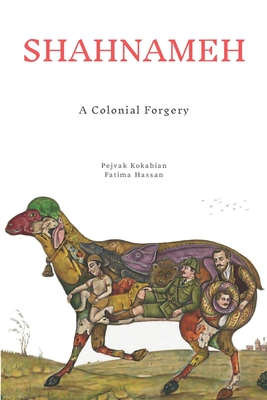
The book questions that false historical belief. The analysis shows that Shahnameh - A Colonial Forgery demonstrates for two main reasons that the Shahnameh contains deep structural ties to Semitic traditions which include the hero stories from the Old Testament and the Islamic epic of the Hamzanama. The complete evidence has existed since the beginning. We chose to ignore it. What you will learn about:
The Colonial Fingerprint
The book centers around its most provocative inquiry:
Why has the Hamzanama-an Islamic storytelling tradition of extraordinary richness-never been granted serious literary comparison with the Shahnameh?
The answer exists outside academic realms. The situation involves political matters.
European colonial scholarship required the Shahnameh to exist before the arrival of Islam. The work needed to show Zoroastrian elements as its original content. The monument represented an ancient Orient which remained untainted by Islamic cultural influences throughout history. Scholars established ancient East values as superior to medieval Islamic values through their dedication to defining the Islamic narrative tradition. The distinction between ancient East values and medieval Islamic values existed because of political beliefs, which decided which texts should receive recognition. The texts, which were recognized as significant, and those which became seen as folk entertainment, depended on the various relationships between people and the relationships which were kept secret. The author(s) of Shahnameh: A Colonial Forgery establishes a connection to the unsettling relationship between the two through comprehensive analysis of both textual and metatextual elements, which leads to a conclusion that will create disturbances throughout three academic fields, literary studies, Iranian studies, and post-colonial academic work.
This masterpiece is not the purely indigenous creation it has long been celebrated as. The work contains structured elements that trace back to the Old Testament through its time period organization and its main narrative developments and its storytelling patterns which scholars have traditionally minimized or entirely rejected.
The process which seems to create destruction actually serves as a process of revealing hidden truths. The groundbreaking work establishes a direct relationship between post-colonial critical frameworks and comparative literary analysis because it shows how different cultures created their most powerful stories through shared storytelling practices.
Log in to write a review for this book.
No reviews yet. Be the first to share your opinion.
Biography not available.
Biography not available.