King, Jeff Author
Biography not available.

Browse all FOLKLORE books
Browse all GARDENS books
Browse all GRAPHIC NOVELS books
Browse all HISTORY - MEDIEVAL books
Browse all HUMOUR books
Browse all Juvenile Fiction : Biographical - Other books
Browse all Juvenile Fiction : Historical - Other books
Browse all Juvenile Fiction : Legends, Myths, & Fables - Other books
Browse all Juvenile Fiction : People & Places - Other books
Browse all Juvenile Fiction : People & Places - United States - Other books
Browse all Juvenile Fiction : Religious - Other books
Browse all Juvenile Nonfiction : History - Other books
Browse all Juvenile Nonfiction : Mathematics - Advanced books
Browse all Juvenile Nonfiction : People & Places - Other books
Browse all Juvenile Nonfiction : People & Places - United States - Othe books
Browse all LITERARY STUDIES books
Browse all LONDON books
Browse all Medical : Nursing - Mental Health books
Browse all MIND books
Browse all MUSEOLOGY books
Browse all NON-CLASSIFIABLE books
Browse all NONLINEAR SCIENCE books
Browse all POPULAR SCIENCE books
Browse all RELIGIOUS STUDIES books
Browse all SPIRIT books
Browse all SPORT books
Browse all TRAVEL WRITING books
 Out of Stock
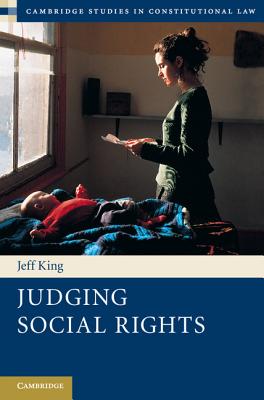
JUDGING SOCIAL RIGHTS
Hardback · ISBN 9781107008021
Inclusive of GST and other taxes
Arriving at your doorstep in 10-15 days
Our logisitcs team will make sure everyitem is delivered safely
| ISBN | 9781107008021 |
|---|---|
| Subtitle | JUDGING SOCIAL RIGHTS |
| Publisher | Cambridge University Press |
| Publication date | October 2012 |
| Language | English |
| MRP | £72.00 GBP |
| Page count | 400 |
| Item weight | 155 g |
Countries that now contemplate constitutional reform often grapple with the question of whether to constitutionalize social rights. This book presents an argument for why, under the right conditions, doing so can be a good way to advance social justice. In making such a case, the author considers the nature of the social minimum, the role of courts among other institutions, the empirical record of judicial impact, and the role of constitutional text. He argues, however, that when enforcing such rights, judges ought to adopt a theory of judicial restraint structured around four principles: democratic legitimacy, polycentricity, expertise and flexibility. These four principles, when taken collectively, commend an incrementalist approach to adjudication. The book combines theoretical, doctrinal, empirical and comparative analysis, and is written to be accessible to lawyers, social scientists, political theorists and human rights advocates.
Log in to write a review for this book.
No reviews yet. Be the first to share your opinion.
Biography not available.