Arcus Foundation, Editor
Biography not available.

Browse all FOLKLORE books
Browse all GARDENS books
Browse all GRAPHIC NOVELS books
Browse all HISTORY - MEDIEVAL books
Browse all HUMOUR books
Browse all Juvenile Fiction : Biographical - Other books
Browse all Juvenile Fiction : Historical - Other books
Browse all Juvenile Fiction : Legends, Myths, & Fables - Other books
Browse all Juvenile Fiction : People & Places - Other books
Browse all Juvenile Fiction : People & Places - United States - Other books
Browse all Juvenile Fiction : Religious - Other books
Browse all Juvenile Nonfiction : History - Other books
Browse all Juvenile Nonfiction : Mathematics - Advanced books
Browse all Juvenile Nonfiction : People & Places - Other books
Browse all Juvenile Nonfiction : People & Places - United States - Othe books
Browse all LITERARY STUDIES books
Browse all LONDON books
Browse all Medical : Nursing - Mental Health books
Browse all MIND books
Browse all MUSEOLOGY books
Browse all NON-CLASSIFIABLE books
Browse all NONLINEAR SCIENCE books
Browse all POPULAR SCIENCE books
Browse all RELIGIOUS STUDIES books
Browse all SPIRIT books
Browse all SPORT books
Browse all TRAVEL WRITING books
 Out of Stock
Hardback · ISBN 9781107067493
Inclusive of GST and other taxes
Arriving at your doorstep in 10-15 days
Our logisitcs team will make sure everyitem is delivered safely
| ISBN | 9781107067493 |
|---|---|
| Publisher | Cambridge University Press |
| Publication date | March 2014 |
| Language | English |
| MRP | £102.00 GBP |
| Page count | 378 |
| Item weight | 177 g |
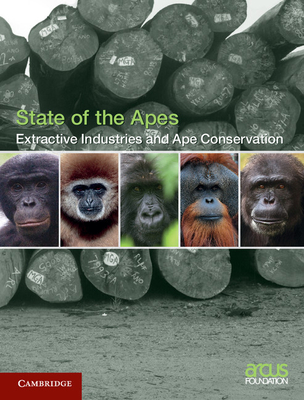
Current dominant thinking and practice in the private and public sectors asserts that peoples' development needs are in conflict with, or mutually exclusive to, the need to conserve the biosphere on which we depend. Consequently, we are asked to either diminish development in the name of conservation or diminish conservation in the name of development. Efforts to identify complementary objectives, or mutually acceptable trade-offs and compromises indicate, however, that this does not always have to be the case. This first volume in the State of the Apes series draws attention to the evolving context within which great ape and gibbon habitats are increasingly interfacing with extractive industries. Intended for a broad range of policy makers, industry experts, decision makers, academics, researchers and NGOs, these publications aim to influence debate, practice and policy, seeking to reconcile ape conservation and welfare, and economic and social development, through objective and rigorous analysis.
Log in to write a review for this book.
No reviews yet. Be the first to share your opinion.
Biography not available.