Peterson, Martin Author
Biography not available.

Browse all FOLKLORE books
Browse all GARDENS books
Browse all GRAPHIC NOVELS books
Browse all HISTORY - MEDIEVAL books
Browse all HUMOUR books
Browse all Juvenile Fiction : Biographical - Other books
Browse all Juvenile Fiction : Historical - Other books
Browse all Juvenile Fiction : Legends, Myths, & Fables - Other books
Browse all Juvenile Fiction : People & Places - Other books
Browse all Juvenile Fiction : People & Places - United States - Other books
Browse all Juvenile Fiction : Religious - Other books
Browse all Juvenile Nonfiction : History - Other books
Browse all Juvenile Nonfiction : Mathematics - Advanced books
Browse all Juvenile Nonfiction : People & Places - Other books
Browse all Juvenile Nonfiction : People & Places - United States - Othe books
Browse all LITERARY STUDIES books
Browse all LONDON books
Browse all Medical : Nursing - Mental Health books
Browse all MIND books
Browse all MUSEOLOGY books
Browse all NON-CLASSIFIABLE books
Browse all NONLINEAR SCIENCE books
Browse all POPULAR SCIENCE books
Browse all RELIGIOUS STUDIES books
Browse all SPIRIT books
Browse all SPORT books
Browse all TRAVEL WRITING books
 Out of Stock
Hardback · ISBN 9781107151598
Inclusive of GST and other taxes
Arriving at your doorstep in 10-15 days
Our logisitcs team will make sure everyitem is delivered safely
| ISBN | 9781107151598 |
|---|---|
| Publisher | Cambridge University Press |
| Publication date | March 2017 |
| Language | English |
| MRP | £75.00 GBP |
| Page count | 350 |
| Item weight | 167 g |
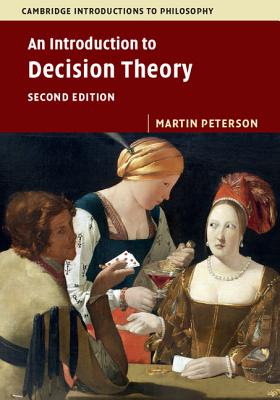
Now revised and updated, this introduction to decision theory is both accessible and comprehensive, covering topics including decision making under ignorance and risk, the foundations of utility theory, the debate over subjective and objective probability, Bayesianism, causal decision theory, game theory, and social choice theory. No mathematical skills are assumed, with all concepts and results explained in non-technical and intuitive as well as more formal ways. There are now over 140 exercises with solutions, along with a glossary of key terms and concepts. This second edition includes a new chapter on risk aversion as well as updated discussions of numerous central ideas, including Newcomb's problem, prisoner's dilemmas, and Arrow's impossibility theorem. The book will appeal particularly to philosophy students but also to readers in a range of disciplines, from computer science and psychology to economics and political science.
Log in to write a review for this book.
No reviews yet. Be the first to share your opinion.
Biography not available.