Ahmed, Dawood Author
Biography not available.

Browse all FOLKLORE books
Browse all GARDENS books
Browse all GRAPHIC NOVELS books
Browse all HISTORY - MEDIEVAL books
Browse all HUMOUR books
Browse all Juvenile Fiction : Biographical - Other books
Browse all Juvenile Fiction : Historical - Other books
Browse all Juvenile Fiction : Legends, Myths, & Fables - Other books
Browse all Juvenile Fiction : People & Places - Other books
Browse all Juvenile Fiction : People & Places - United States - Other books
Browse all Juvenile Fiction : Religious - Other books
Browse all Juvenile Nonfiction : History - Other books
Browse all Juvenile Nonfiction : Mathematics - Advanced books
Browse all Juvenile Nonfiction : People & Places - Other books
Browse all Juvenile Nonfiction : People & Places - United States - Othe books
Browse all LITERARY STUDIES books
Browse all LONDON books
Browse all Medical : Nursing - Mental Health books
Browse all MIND books
Browse all MUSEOLOGY books
Browse all NON-CLASSIFIABLE books
Browse all NONLINEAR SCIENCE books
Browse all POPULAR SCIENCE books
Browse all RELIGIOUS STUDIES books
Browse all SPIRIT books
Browse all SPORT books
Browse all TRAVEL WRITING books
 Out of Stock
Hardback · ISBN 9781107158054
Inclusive of GST and other taxes
Arriving at your doorstep in 10-15 days
Our logisitcs team will make sure everyitem is delivered safely
| ISBN | 9781107158054 |
|---|---|
| Publisher | Cambridge University Press |
| Publication date | March 2023 |
| Language | English |
| MRP | £87.00 GBP |
| Page count | 232 |
| Item weight | 106 g |
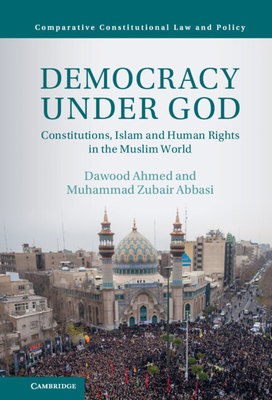
State recognition of Islam in Muslim countries invites fierce debate from scholars and politicians alike, some of whom assume an inherent conflict between Islam and liberal democracy. Analyzing case studies and empirical data from several Muslim-majority countries, Ahmed and Abbasi find, counterintuitively, that in many Muslim countries, constitutional recognition of Islam often occurs during moments of democratization. Indeed, the insertion of Islam in a constitution is frequently accompanied by an expansion, not a reduction, in constitutional human rights, with case law from higher courts in Egypt and Pakistan demonstrating that potential tensions between the constitutional pursuit of human rights, liberal democracy and Islam are capable of judicial resolution. The authors also argue that colonial history was pivotal in determining whether a country adopted the constitutional path of Islam or secularism partly explaining why Islam in constitutional politics survived and became more prevalent in Muslim countries that were colonized by the British, and not those colonized by the French or Soviets.
Log in to write a review for this book.
No reviews yet. Be the first to share your opinion.
Biography not available.
Biography not available.