Craig, Hugh Author
Biography not available.

Browse all FOLKLORE books
Browse all GARDENS books
Browse all GRAPHIC NOVELS books
Browse all HISTORY - MEDIEVAL books
Browse all HUMOUR books
Browse all Juvenile Fiction : Biographical - Other books
Browse all Juvenile Fiction : Historical - Other books
Browse all Juvenile Fiction : Legends, Myths, & Fables - Other books
Browse all Juvenile Fiction : People & Places - Other books
Browse all Juvenile Fiction : People & Places - United States - Other books
Browse all Juvenile Fiction : Religious - Other books
Browse all Juvenile Nonfiction : History - Other books
Browse all Juvenile Nonfiction : Mathematics - Advanced books
Browse all Juvenile Nonfiction : People & Places - Other books
Browse all Juvenile Nonfiction : People & Places - United States - Othe books
Browse all LITERARY STUDIES books
Browse all LONDON books
Browse all Medical : Nursing - Mental Health books
Browse all MIND books
Browse all MUSEOLOGY books
Browse all NON-CLASSIFIABLE books
Browse all NONLINEAR SCIENCE books
Browse all POPULAR SCIENCE books
Browse all RELIGIOUS STUDIES books
Browse all SPIRIT books
Browse all SPORT books
Browse all TRAVEL WRITING books
 Out of Stock
Hardback · ISBN 9781107191013
Inclusive of GST and other taxes
Arriving at your doorstep in 10-15 days
Our logisitcs team will make sure everyitem is delivered safely
| ISBN | 9781107191013 |
|---|---|
| Publisher | Cambridge University Press |
| Publication date | August 2017 |
| Language | English |
| MRP | £101.00 GBP |
| Page count | 302 |
| Item weight | 127 g |
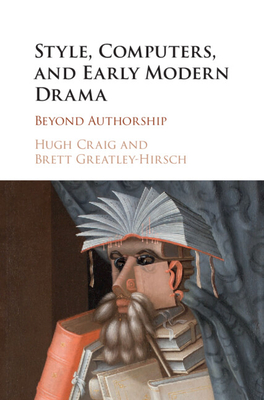
Hugh Craig and Brett Greatley-Hirsch extend the computational analysis introduced in Shakespeare, Computers, and the Mystery of Authorship (edited by Hugh Craig and Arthur F. Kinney; Cambridge, 2009) beyond problems of authorship attribution to address broader issues of literary history. Using new methods to answer long-standing questions and challenge traditional assumptions about the underlying patterns and contrasts in the plays of Shakespeare and his contemporaries, Style, Computers, and Early Modern Drama sheds light on, for example, different linguistic usages between plays written in verse and prose, company styles and different character types. As a shift from a canonical survey to a corpus-based literary history founded on a statistical analysis of language, this book represents a fundamentally new approach to the study of English Renaissance literature and proposes a new model and rationale for future computational scholarship in early modern literary studies.
Log in to write a review for this book.
No reviews yet. Be the first to share your opinion.
Biography not available.
Biography not available.