Segev, Mor Author
Biography not available.

Browse all FOLKLORE books
Browse all GARDENS books
Browse all GRAPHIC NOVELS books
Browse all HISTORY - MEDIEVAL books
Browse all HUMOUR books
Browse all Juvenile Fiction : Biographical - Other books
Browse all Juvenile Fiction : Historical - Other books
Browse all Juvenile Fiction : Legends, Myths, & Fables - Other books
Browse all Juvenile Fiction : People & Places - Other books
Browse all Juvenile Fiction : People & Places - United States - Other books
Browse all Juvenile Fiction : Religious - Other books
Browse all Juvenile Nonfiction : History - Other books
Browse all Juvenile Nonfiction : Mathematics - Advanced books
Browse all Juvenile Nonfiction : People & Places - Other books
Browse all Juvenile Nonfiction : People & Places - United States - Othe books
Browse all LITERARY STUDIES books
Browse all LONDON books
Browse all Medical : Nursing - Mental Health books
Browse all MIND books
Browse all MUSEOLOGY books
Browse all NON-CLASSIFIABLE books
Browse all NONLINEAR SCIENCE books
Browse all POPULAR SCIENCE books
Browse all RELIGIOUS STUDIES books
Browse all SPIRIT books
Browse all SPORT books
Browse all TRAVEL WRITING books
 Out of Stock
Paperback · ISBN 9781108401012
Inclusive of GST and other taxes
Arriving at your doorstep in 10-15 days
Our logisitcs team will make sure everyitem is delivered safely
| ISBN | 9781108401012 |
|---|---|
| Publisher | Cambridge University Press |
| Publication date | April 2019 |
| Language | English |
| MRP | £34.00 GBP |
| Page count | 202 |
| Item weight | 61 g |
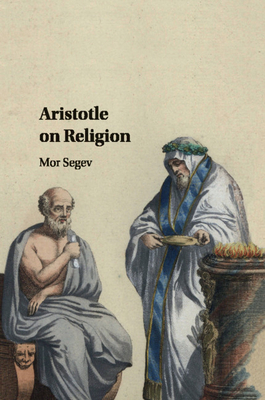
Aristotle is a severe critic of traditional religion, believing it to be false, yet he also holds that traditional religion and its institutions are necessary if any city, including the ideal city he describes in the Politics, is to exist and flourish. This book provides, for the first time, a coherent account of the socio-political role which Aristotle attributes to traditional religion despite his rejection of its content. Mor Segev argues that Aristotle thinks traditional religion is politically necessary because it prepares the ground for what he considers the pinnacle of human endeavor: attaining the knowledge of first philosophy, whose objects are real beings worthy of being called gods. Developing this interpretation, Segev goes on to analyze Aristotle's references to the myths of traditional Greek religion, and to assess his influence on medieval Jewish and Christian theology and philosophy of religion.
Log in to write a review for this book.
No reviews yet. Be the first to share your opinion.
Biography not available.