Duncan, T. Michael Author
Biography not available.

Browse all FOLKLORE books
Browse all GARDENS books
Browse all GRAPHIC NOVELS books
Browse all HISTORY - MEDIEVAL books
Browse all HUMOUR books
Browse all Juvenile Fiction : Biographical - Other books
Browse all Juvenile Fiction : Historical - Other books
Browse all Juvenile Fiction : Legends, Myths, & Fables - Other books
Browse all Juvenile Fiction : People & Places - Other books
Browse all Juvenile Fiction : People & Places - United States - Other books
Browse all Juvenile Fiction : Religious - Other books
Browse all Juvenile Nonfiction : History - Other books
Browse all Juvenile Nonfiction : Mathematics - Advanced books
Browse all Juvenile Nonfiction : People & Places - Other books
Browse all Juvenile Nonfiction : People & Places - United States - Othe books
Browse all LITERARY STUDIES books
Browse all LONDON books
Browse all Medical : Nursing - Mental Health books
Browse all MIND books
Browse all MUSEOLOGY books
Browse all NON-CLASSIFIABLE books
Browse all NONLINEAR SCIENCE books
Browse all POPULAR SCIENCE books
Browse all RELIGIOUS STUDIES books
Browse all SPIRIT books
Browse all SPORT books
Browse all TRAVEL WRITING books
 Out of Stock
Hardback · ISBN 9781108421478
Inclusive of GST and other taxes
Arriving at your doorstep in 10-15 days
Our logisitcs team will make sure everyitem is delivered safely
| ISBN | 9781108421478 |
|---|---|
| Publisher | Cambridge University Press |
| Publication date | April 2019 |
| Language | English |
| MRP | £87.00 GBP |
| Page count | 594 |
| Item weight | 251 g |
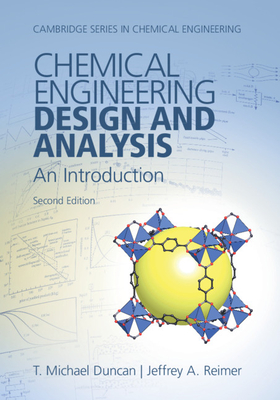
This textbook puts design at the center of introducing students to the course in mass and energy balances in chemical engineering. Employers and accreditations increasingly stress the importance of design in the engineering curriculum, and design-driven analysis will motivate students to dig deeply into the key concepts of the field. The second edition has been completely revised and updated. It introduces the central steps in design and three methods of analysis: mathematical modeling, graphical methods, and dimensional analysis. Students learn how to apply engineering skills, such as how to simplify calculations through assumptions and approximations; how to verify calculations, significant figures, spreadsheets, graphing (standard, semi-log and log-log); and how to use data maps, in the contexts of contemporary chemical processes such as the hydrogen economy, petrochemical and biochemical processes, polymers, semiconductors, and pharmaceuticals.
Log in to write a review for this book.
No reviews yet. Be the first to share your opinion.
Biography not available.
Biography not available.