Howard, Lise Morjé|| Author
Biography not available.

Browse all FOLKLORE books
Browse all GARDENS books
Browse all GRAPHIC NOVELS books
Browse all HISTORY - MEDIEVAL books
Browse all HUMOUR books
Browse all Juvenile Fiction : Biographical - Other books
Browse all Juvenile Fiction : Historical - Other books
Browse all Juvenile Fiction : Legends, Myths, & Fables - Other books
Browse all Juvenile Fiction : People & Places - Other books
Browse all Juvenile Fiction : People & Places - United States - Other books
Browse all Juvenile Fiction : Religious - Other books
Browse all Juvenile Nonfiction : History - Other books
Browse all Juvenile Nonfiction : Mathematics - Advanced books
Browse all Juvenile Nonfiction : People & Places - Other books
Browse all Juvenile Nonfiction : People & Places - United States - Othe books
Browse all LITERARY STUDIES books
Browse all LONDON books
Browse all Medical : Nursing - Mental Health books
Browse all MIND books
Browse all MUSEOLOGY books
Browse all NON-CLASSIFIABLE books
Browse all NONLINEAR SCIENCE books
Browse all POPULAR SCIENCE books
Browse all RELIGIOUS STUDIES books
Browse all SPIRIT books
Browse all SPORT books
Browse all TRAVEL WRITING books
 Out of Stock
Paperback · ISBN 9781108457187
Inclusive of GST and other taxes
Arriving at your doorstep in 10-15 days
Our logisitcs team will make sure everyitem is delivered safely
| ISBN | 9781108457187 |
|---|---|
| Publisher | Cambridge University Press |
| Publication date | May 2019 |
| Language | English |
| MRP | £28.00 GBP |
| Page count | 276 |
| Item weight | 83 g |
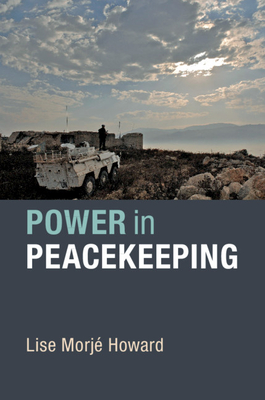
United Nations peacekeeping has proven remarkably effective at reducing the death and destruction of civil wars. But how peacekeepers achieve their ends remains under-explored. This book presents a typological theory of how peacekeepers exercise power. If power is the ability of A to get B to behave differently, peacekeepers convince the peacekept to stop fighting in three basic ways: they persuade verbally, induce financially, and coerce through deterrence, surveillance and arrest. Based on more than two decades of study, interviews with peacekeepers, unpublished records on Namibia, and ethnographic observation of peacekeepers in Lebanon, DR Congo, and the Central African Republic, this book explains how peacekeepers achieve their goals, and differentiates peacekeeping from its less effective cousin, counterinsurgency. It recommends a new international division of labor, whereby actual military forces hone their effective use of compulsion, while UN peacekeepers build on their strengths of persuasion, inducement, and coercion short of offensive force.
Log in to write a review for this book.
No reviews yet. Be the first to share your opinion.
Biography not available.