Kaplan, Seth D. Author
Biography not available.

Browse all FOLKLORE books
Browse all GARDENS books
Browse all GRAPHIC NOVELS books
Browse all HISTORY - MEDIEVAL books
Browse all HUMOUR books
Browse all Juvenile Fiction : Biographical - Other books
Browse all Juvenile Fiction : Historical - Other books
Browse all Juvenile Fiction : Legends, Myths, & Fables - Other books
Browse all Juvenile Fiction : People & Places - Other books
Browse all Juvenile Fiction : People & Places - United States - Other books
Browse all Juvenile Fiction : Religious - Other books
Browse all Juvenile Nonfiction : History - Other books
Browse all Juvenile Nonfiction : Mathematics - Advanced books
Browse all Juvenile Nonfiction : People & Places - Other books
Browse all Juvenile Nonfiction : People & Places - United States - Othe books
Browse all LITERARY STUDIES books
Browse all LONDON books
Browse all Medical : Nursing - Mental Health books
Browse all MIND books
Browse all MUSEOLOGY books
Browse all NON-CLASSIFIABLE books
Browse all NONLINEAR SCIENCE books
Browse all POPULAR SCIENCE books
Browse all RELIGIOUS STUDIES books
Browse all SPIRIT books
Browse all SPORT books
Browse all TRAVEL WRITING books
 Out of Stock
Paperback · ISBN 9781108457323
Inclusive of GST and other taxes
Arriving at your doorstep in 10-15 days
Our logisitcs team will make sure everyitem is delivered safely
| ISBN | 9781108457323 |
|---|---|
| Publisher | Cambridge University Press |
| Publication date | April 2019 |
| Language | English |
| MRP | £34.00 GBP |
| Page count | 270 |
| Item weight | 81 g |
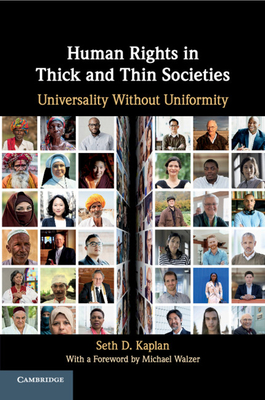
Socio-centric societies have vibrant - albeit different - concepts of human flourishing than is typical in the individualistic West. These concepts influence the promotion of human rights, both in domestic contexts with religious minorities and in international contexts where Western ideals may clash with local norms. Human Rights in Thick and Thin Societies uncovers the original intentions of the drafters of the Universal Declaration of Human Rights, finds inspiration from early leaders in the field like Eleanor Roosevelt, and examines the implications of recent advances in cultural psychology for understanding difference. The case studies included illustrate the need to vary the application of human rights in differing cultural environments, and the book suggests a new framework: a flexible universalism that returns to basics - focusing on the great evils of the human condition. This approach will help the human rights movement succeed in a multipolar era.
Log in to write a review for this book.
No reviews yet. Be the first to share your opinion.
Biography not available.