Fontaine, Philippe Editor
Biography not available.

Browse all FOLKLORE books
Browse all GARDENS books
Browse all GRAPHIC NOVELS books
Browse all HISTORY - MEDIEVAL books
Browse all HUMOUR books
Browse all Juvenile Fiction : Biographical - Other books
Browse all Juvenile Fiction : Historical - Other books
Browse all Juvenile Fiction : Legends, Myths, & Fables - Other books
Browse all Juvenile Fiction : People & Places - Other books
Browse all Juvenile Fiction : People & Places - United States - Other books
Browse all Juvenile Fiction : Religious - Other books
Browse all Juvenile Nonfiction : History - Other books
Browse all Juvenile Nonfiction : Mathematics - Advanced books
Browse all Juvenile Nonfiction : People & Places - Other books
Browse all Juvenile Nonfiction : People & Places - United States - Othe books
Browse all LITERARY STUDIES books
Browse all LONDON books
Browse all Medical : Nursing - Mental Health books
Browse all MIND books
Browse all MUSEOLOGY books
Browse all NON-CLASSIFIABLE books
Browse all NONLINEAR SCIENCE books
Browse all POPULAR SCIENCE books
Browse all RELIGIOUS STUDIES books
Browse all SPIRIT books
Browse all SPORT books
Browse all TRAVEL WRITING books
 Out of Stock
Hardback · ISBN 9781108487139
Inclusive of GST and other taxes
Arriving at your doorstep in 10-15 days
Our logisitcs team will make sure everyitem is delivered safely
| ISBN | 9781108487139 |
|---|---|
| Publisher | Cambridge University Press |
| Publication date | December 2020 |
| Language | English |
| MRP | £99.00 GBP |
| Page count | 418 |
| Item weight | 160 g |
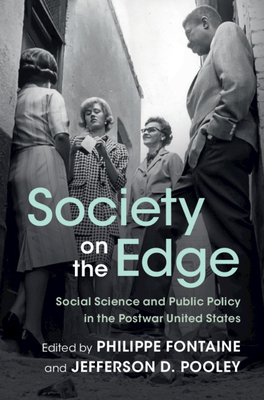
The social sciences underwent rapid development in postwar America. Problems once framed in social terms gradually became redefined as individual with regards to scope and remedy, with economics and psychology winning influence over the other social sciences. By the 1970s, both economics and psychology had spread their intellectual remits wide: psychology's concepts suffused everyday language, while economists entered a myriad of policy debates. Psychology and economics contributed to, and benefited from, a conception of society that was increasingly skeptical of social explanations and interventions. Sociology, in particular, lost intellectual and policy ground to its peers, even regarding 'social problems' that the discipline long considered its settled domain. The book's ten chapters explore this shift, each refracted through a single 'problem': the family, crime, urban concerns, education, discrimination, poverty, addiction, war, and mental health, examining the effects an increasingly individualized lens has had on the way we see these problems.
Log in to write a review for this book.
No reviews yet. Be the first to share your opinion.
Biography not available.
Biography not available.