Lixinski, Lucas Author
Biography not available.

Browse all FOLKLORE books
Browse all GARDENS books
Browse all GRAPHIC NOVELS books
Browse all HISTORY - MEDIEVAL books
Browse all HUMOUR books
Browse all Juvenile Fiction : Biographical - Other books
Browse all Juvenile Fiction : Historical - Other books
Browse all Juvenile Fiction : Legends, Myths, & Fables - Other books
Browse all Juvenile Fiction : People & Places - Other books
Browse all Juvenile Fiction : People & Places - United States - Other books
Browse all Juvenile Fiction : Religious - Other books
Browse all Juvenile Nonfiction : History - Other books
Browse all Juvenile Nonfiction : Mathematics - Advanced books
Browse all Juvenile Nonfiction : People & Places - Other books
Browse all Juvenile Nonfiction : People & Places - United States - Othe books
Browse all LITERARY STUDIES books
Browse all LONDON books
Browse all Medical : Nursing - Mental Health books
Browse all MIND books
Browse all MUSEOLOGY books
Browse all NON-CLASSIFIABLE books
Browse all NONLINEAR SCIENCE books
Browse all POPULAR SCIENCE books
Browse all RELIGIOUS STUDIES books
Browse all SPIRIT books
Browse all SPORT books
Browse all TRAVEL WRITING books
 Out of Stock
Hardback · ISBN 9781108488150
Inclusive of GST and other taxes
Arriving at your doorstep in 10-15 days
Our logisitcs team will make sure everyitem is delivered safely
| ISBN | 9781108488150 |
|---|---|
| Publisher | Cambridge University Press |
| Publication date | April 2021 |
| Language | English |
| MRP | £109.00 GBP |
| Page count | 250 |
| Item weight | 112 g |
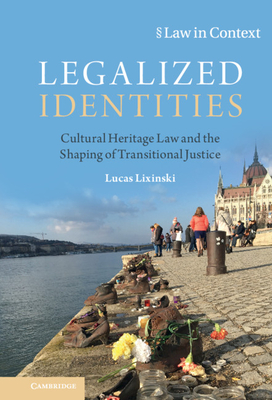
Cultural heritage is a feature of transitioning societies, from museums commemorating the end of a dictatorship to adding places like the Auschwitz-Birkenau concentration camp to the World Heritage List. These processes are governed by specific laws, and yet transitional justice discourses tend to ignore law's role, assuming that memory in transition emerges organically. This book debunks this assumption, showing how cultural heritage law is integral to what memory and cultural identity is possible in transition. Lixinski attempts to reengage with the original promise of transitional justice: to pragmatically advance societies towards a future where atrocities will no longer happen. The promise in the UNESCO Constitution of lasting peace through cultural understanding is possible through focusing on the intersection of cultural heritage law and transitional justice, as Lixinski shows in this ground-breaking book.
Log in to write a review for this book.
No reviews yet. Be the first to share your opinion.
Biography not available.