Kage, Rieko Author
Biography not available.

Browse all FOLKLORE books
Browse all GARDENS books
Browse all GRAPHIC NOVELS books
Browse all HISTORY - MEDIEVAL books
Browse all HUMOUR books
Browse all Juvenile Fiction : Biographical - Other books
Browse all Juvenile Fiction : Historical - Other books
Browse all Juvenile Fiction : Legends, Myths, & Fables - Other books
Browse all Juvenile Fiction : People & Places - Other books
Browse all Juvenile Fiction : People & Places - United States - Other books
Browse all Juvenile Fiction : Religious - Other books
Browse all Juvenile Nonfiction : History - Other books
Browse all Juvenile Nonfiction : Mathematics - Advanced books
Browse all Juvenile Nonfiction : People & Places - Other books
Browse all Juvenile Nonfiction : People & Places - United States - Othe books
Browse all LITERARY STUDIES books
Browse all LONDON books
Browse all Medical : Nursing - Mental Health books
Browse all MIND books
Browse all MUSEOLOGY books
Browse all NON-CLASSIFIABLE books
Browse all NONLINEAR SCIENCE books
Browse all POPULAR SCIENCE books
Browse all RELIGIOUS STUDIES books
Browse all SPIRIT books
Browse all SPORT books
Browse all TRAVEL WRITING books
 Out of Stock
Paperback · ISBN 9781108707091
Inclusive of GST and other taxes
Arriving at your doorstep in 10-15 days
Our logisitcs team will make sure everyitem is delivered safely
| ISBN | 9781108707091 |
|---|---|
| Publisher | Cambridge University Press |
| Publication date | February 2019 |
| Language | English |
| MRP | £34.00 GBP |
| Page count | 280 |
| Item weight | 84 g |
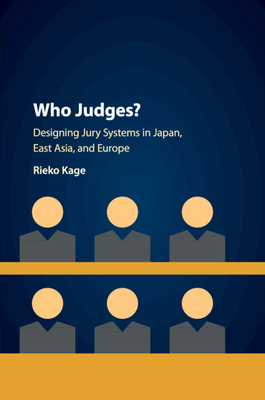
The delivery of justice is a core function of the modern state. The recent introduction of jury/lay judge systems for criminal trials in Japan, South Korea, Spain, and perhaps soon Taiwan represents a potentially major reform of this core function, shifting decision making authority from professional judges to ordinary citizens. But the four countries chose to empower their citizens to markedly different degrees. Why? Who Judges? is the first book to offer a systematic account for why different countries design their new jury/lay judge systems in very different ways. Drawing on detailed theoretical analysis, original case studies, and content analysis of fifty years of Japanese parliamentary debates, the book reveals that the relative power of 'new left'-oriented political parties explains the different magnitudes of reform in the four countries. Rieko Kage's vital new study opens up an exciting new area of research for comparative politics and socio-legal studies.
Log in to write a review for this book.
No reviews yet. Be the first to share your opinion.
Biography not available.