Winner, Ellen Author
Biography not available.

Browse all FOLKLORE books
Browse all GARDENS books
Browse all GRAPHIC NOVELS books
Browse all HISTORY - MEDIEVAL books
Browse all HUMOUR books
Browse all Juvenile Fiction : Biographical - Other books
Browse all Juvenile Fiction : Historical - Other books
Browse all Juvenile Fiction : Legends, Myths, & Fables - Other books
Browse all Juvenile Fiction : People & Places - Other books
Browse all Juvenile Fiction : People & Places - United States - Other books
Browse all Juvenile Fiction : Religious - Other books
Browse all Juvenile Nonfiction : History - Other books
Browse all Juvenile Nonfiction : Mathematics - Advanced books
Browse all Juvenile Nonfiction : People & Places - Other books
Browse all Juvenile Nonfiction : People & Places - United States - Othe books
Browse all LITERARY STUDIES books
Browse all LONDON books
Browse all Medical : Nursing - Mental Health books
Browse all MIND books
Browse all MUSEOLOGY books
Browse all NON-CLASSIFIABLE books
Browse all NONLINEAR SCIENCE books
Browse all POPULAR SCIENCE books
Browse all RELIGIOUS STUDIES books
Browse all SPIRIT books
Browse all SPORT books
Browse all TRAVEL WRITING books
 Out of Stock
Paperback · ISBN 9781108947725
Inclusive of GST and other taxes
Arriving at your doorstep in 10-15 days
Our logisitcs team will make sure everyitem is delivered safely
| ISBN | 9781108947725 |
|---|---|
| Publisher | Cambridge University Press |
| Publication date | April 2022 |
| Language | English |
| MRP | £18.00 GBP |
| Page count | 96 |
| Item weight | 31 g |
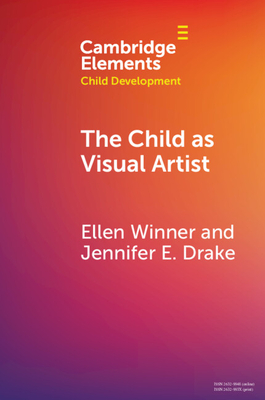
This Element focuses on the development of drawing (and painting) in childhood. The author begins by examining children's representational drawing, a topic that has received quite wide attention from the nineteenth century on. The author then turns to issues that have received far less attention and discusses the aesthetic property of expression, weighing the claim that young children's highly expressive drawings bear an affinity to twentieth century modernist art. The author then examines the function of drawing for children's emotional development. Next, looking at art prodigies, the author turns to the how of drawing, considering the relation of drawing talent to IQ and to visual-spatial skills. Finally, the author considers the relation between development and education in art and how educators can best nurture children's artistic development.
Log in to write a review for this book.
No reviews yet. Be the first to share your opinion.
Biography not available.
Biography not available.