Bozó, Péter Author
Biography not available.

Browse all FOLKLORE books
Browse all GARDENS books
Browse all GRAPHIC NOVELS books
Browse all HISTORY - MEDIEVAL books
Browse all HUMOUR books
Browse all Juvenile Fiction : Biographical - Other books
Browse all Juvenile Fiction : Historical - Other books
Browse all Juvenile Fiction : Legends, Myths, & Fables - Other books
Browse all Juvenile Fiction : People & Places - Other books
Browse all Juvenile Fiction : People & Places - United States - Other books
Browse all Juvenile Fiction : Religious - Other books
Browse all Juvenile Nonfiction : History - Other books
Browse all Juvenile Nonfiction : Mathematics - Advanced books
Browse all Juvenile Nonfiction : People & Places - Other books
Browse all Juvenile Nonfiction : People & Places - United States - Othe books
Browse all LITERARY STUDIES books
Browse all LONDON books
Browse all Medical : Nursing - Mental Health books
Browse all MIND books
Browse all MUSEOLOGY books
Browse all NON-CLASSIFIABLE books
Browse all NONLINEAR SCIENCE books
Browse all POPULAR SCIENCE books
Browse all RELIGIOUS STUDIES books
Browse all SPIRIT books
Browse all SPORT books
Browse all TRAVEL WRITING books
 Out of Stock
Paperback · ISBN 9781108977593
Inclusive of GST and other taxes
Arriving at your doorstep in 10-15 days
Our logisitcs team will make sure everyitem is delivered safely
| ISBN | 9781108977593 |
|---|---|
| Publisher | Cambridge University Press |
| Publication date | June 2022 |
| Language | English |
| MRP | £18.00 GBP |
| Page count | 90 |
| Item weight | 32 g |
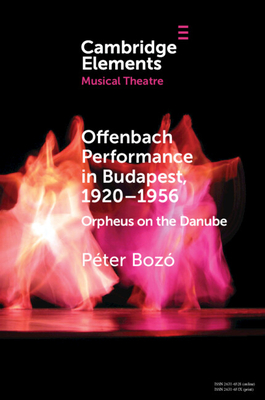
As a legacy of the Habsburg Empire, performances of Jacques Offenbach's musical stage works played an important role in Budapest musico-theatrical life in the twentieth century. However, between the collapse of the Empire and the 1956 anti-Soviet revolution, political ideologies strongly influenced the character of these productions, when they took place. Public performances of Offenbach's works were prohibited between 1938 and 1945 and they became the bases for propagandadistic adaptations in the 1950s. This element explores how the local operetta tradition and the vogue of operettas featuring composers as characters during the interwar period were also important factors in how Offenbach's stage works were performed in mid-twentieth century Budapest in versions that sometimes bore little resemblance to the originals.
Log in to write a review for this book.
No reviews yet. Be the first to share your opinion.
Biography not available.