Kogelmann, Brian Author
Biography not available.

Browse all FOLKLORE books
Browse all GARDENS books
Browse all GRAPHIC NOVELS books
Browse all HISTORY - MEDIEVAL books
Browse all HUMOUR books
Browse all Juvenile Fiction : Biographical - Other books
Browse all Juvenile Fiction : Historical - Other books
Browse all Juvenile Fiction : Legends, Myths, & Fables - Other books
Browse all Juvenile Fiction : People & Places - Other books
Browse all Juvenile Fiction : People & Places - United States - Other books
Browse all Juvenile Fiction : Religious - Other books
Browse all Juvenile Nonfiction : History - Other books
Browse all Juvenile Nonfiction : Mathematics - Advanced books
Browse all Juvenile Nonfiction : People & Places - Other books
Browse all Juvenile Nonfiction : People & Places - United States - Othe books
Browse all LITERARY STUDIES books
Browse all LONDON books
Browse all Medical : Nursing - Mental Health books
Browse all MIND books
Browse all MUSEOLOGY books
Browse all NON-CLASSIFIABLE books
Browse all NONLINEAR SCIENCE books
Browse all POPULAR SCIENCE books
Browse all RELIGIOUS STUDIES books
Browse all SPIRIT books
Browse all SPORT books
Browse all TRAVEL WRITING books
 Out of Stock
Paperback · ISBN 9781108978248
Inclusive of GST and other taxes
Arriving at your doorstep in 10-15 days
Our logisitcs team will make sure everyitem is delivered safely
| ISBN | 9781108978248 |
|---|---|
| Publisher | Cambridge University Press |
| Publication date | October 2023 |
| Language | English |
| MRP | £26.00 GBP |
| Page count | 258 |
| Item weight | 77 g |
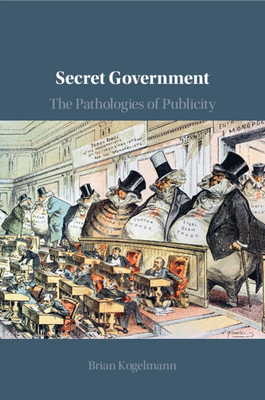
Among politicians and policy-makers it is almost universally assumed that more transparency in government is better. Until now, philosophers have almost completely ignored the topic of transparency, and when it is discussed there seems to be an assumption (shared with politicians and policy-makers) that increased transparency is a good thing, which results in no serious attempt to justify it. In this book Brian Kogelmann shows that the standard narrative is false and that many arguments in defence of transparency are weak. He offers a comprehensive philosophical analysis of transparency in government, examining both abstract normative defences of transparency, and transparency's role in the theory of institutional design. His book shows that even when the arguments in favour of transparency are compelling, the costs associated with it are just as forceful as the original arguments themselves, and that strong arguments can be made in defence of more opaque institutions.
Log in to write a review for this book.
No reviews yet. Be the first to share your opinion.
Biography not available.