Singh, Pardeep Author
Biography not available.

Browse all FOLKLORE books
Browse all GARDENS books
Browse all GRAPHIC NOVELS books
Browse all HISTORY - MEDIEVAL books
Browse all HUMOUR books
Browse all Juvenile Fiction : Biographical - Other books
Browse all Juvenile Fiction : Historical - Other books
Browse all Juvenile Fiction : Legends, Myths, & Fables - Other books
Browse all Juvenile Fiction : People & Places - Other books
Browse all Juvenile Fiction : People & Places - United States - Other books
Browse all Juvenile Fiction : Religious - Other books
Browse all Juvenile Nonfiction : History - Other books
Browse all Juvenile Nonfiction : Mathematics - Advanced books
Browse all Juvenile Nonfiction : People & Places - Other books
Browse all Juvenile Nonfiction : People & Places - United States - Othe books
Browse all LITERARY STUDIES books
Browse all LONDON books
Browse all Medical : Nursing - Mental Health books
Browse all MIND books
Browse all MUSEOLOGY books
Browse all NON-CLASSIFIABLE books
Browse all NONLINEAR SCIENCE books
Browse all POPULAR SCIENCE books
Browse all RELIGIOUS STUDIES books
Browse all SPIRIT books
Browse all SPORT books
Browse all TRAVEL WRITING books
 Out of Stock
Hardback · ISBN 9781119741442
Inclusive of GST and other taxes
Arriving at your doorstep in 10-15 days
Our logisitcs team will make sure everyitem is delivered safely
| ISBN | 9781119741442 |
|---|---|
| Publisher | Wiley-Blackwell |
| Publication date | September 2021 |
| Language | English |
| MRP | £161.95 GBP |
| Page count | 348 |
| Item weight | 166 g |
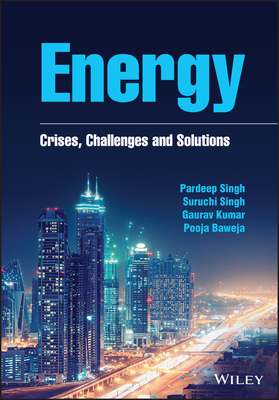
Energy
Global energy demand has more than doubled since 1970. The use of energy is strongly related to almost every conceivable aspect of development: wealth, health, nutrition, water, infrastructure, education and even life expectancy itself are strongly and significantly related to the consumption of energy per capita. Many development indicators are strongly related to per-capita energy consumption. Fossil fuel is the most conventional source of energy but also increases greenhouse gas emissions. The economic development of many countries has come at the cost of the environment. However, it should not be presumed that a reconciliation of the two is not possible.
The nexus concept is the interconnection between the resource energy, water, food, land, and climate. Such interconnections enable us to address trade-offs and seek synergies among them. Energy, water, food, land, and climate are essential resources of our natural environment and support our quality of life. Competition between these resources is increasing globally and is exacerbated by climate change. Improving resilience and securing resource availability would require improving resource efficiency. Many policies and programs are announced nationally and internationally for replacing the conventional mode and also emphasizing on conservation of fossil fuels and reuse of exhausted energy, so a gap in implications and outcomes can be broadly traced by comparing the data.
This book aims to highlight problems and solutions related to conventional energy utilization, formation, and multitudes of ecological impacts and tools for the conservation of fossil fuels. The book also discusses modern energy services as one of the sustainable development goals and how the pressure on resource energy disturbs the natural flows. The recent advances in alternative energy sources and their possible future growth are discussed and on how conventional energy leads to greenhouse gas formation, which reduces energy use efficiency. The different policies and models operating is also addressed, and the gaps that remained between them. Climate change poses a challenge for renewable energy, and thus it is essential to identify the factors that would reduce the possibility of relying on sustainable energy sources.
This book will be of interest to researchers and stakeholders, students, industries, NGOs, and governmental agencies directly or indirectly associated with energy research.
Log in to write a review for this book.
No reviews yet. Be the first to share your opinion.
Biography not available.