Tomasini, Floris Author
Biography not available.

Browse all FOLKLORE books
Browse all GARDENS books
Browse all GRAPHIC NOVELS books
Browse all HISTORY - MEDIEVAL books
Browse all HUMOUR books
Browse all Juvenile Fiction : Biographical - Other books
Browse all Juvenile Fiction : Historical - Other books
Browse all Juvenile Fiction : Legends, Myths, & Fables - Other books
Browse all Juvenile Fiction : People & Places - Other books
Browse all Juvenile Fiction : People & Places - United States - Other books
Browse all Juvenile Fiction : Religious - Other books
Browse all Juvenile Nonfiction : History - Other books
Browse all Juvenile Nonfiction : Mathematics - Advanced books
Browse all Juvenile Nonfiction : People & Places - Other books
Browse all Juvenile Nonfiction : People & Places - United States - Othe books
Browse all LITERARY STUDIES books
Browse all LONDON books
Browse all Medical : Nursing - Mental Health books
Browse all MIND books
Browse all MUSEOLOGY books
Browse all NON-CLASSIFIABLE books
Browse all NONLINEAR SCIENCE books
Browse all POPULAR SCIENCE books
Browse all RELIGIOUS STUDIES books
Browse all SPIRIT books
Browse all SPORT books
Browse all TRAVEL WRITING books
 Out of Stock
Hardback · ISBN 9781137538277
Inclusive of GST and other taxes
Arriving at your doorstep in 10-15 days
Our logisitcs team will make sure everyitem is delivered safely
| ISBN | 9781137538277 |
|---|---|
| Publisher | Palgrave Macmillan |
| Publication date | August 2017 |
| Language | English |
| MRP | £20.00 GBP |
| Page count | 112 |
| Item weight | 64 g |
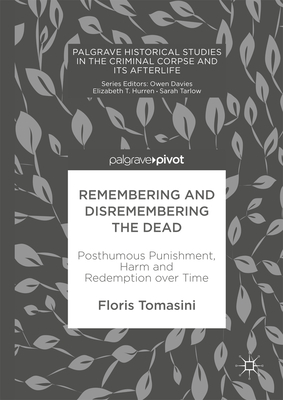
This book is a multidisciplinary work that investigates the notion of posthumous harm over time. The question what is and when is death, affects how we understand the possibility of posthumous harm and redemption. Whilst it is impossible to hurt the dead, it is possible to harm the wishes, beliefs and memories of persons that once lived. In this way, this book highlights the vulnerability of the dead, and makes connections to a historical oeuvre, to add critical value to similar concepts in history that are overlooked by most philosophers. There is a long historical view of case studies that illustrate the conceptual character of posthumous punishment; that is, dissection and gibbetting of the criminal corpse after the Murder Act (1752), and those shot at dawn during the First World War. A long historical view is also taken of posthumous harm; that is, body-snatching in the late Georgian period, and organ-snatching at Alder Hey in the 1990s.
Log in to write a review for this book.
No reviews yet. Be the first to share your opinion.
Biography not available.