Tellidis, Ioannis Editor
Biography not available.

Browse all FOLKLORE books
Browse all GARDENS books
Browse all GRAPHIC NOVELS books
Browse all HISTORY - MEDIEVAL books
Browse all HUMOUR books
Browse all Juvenile Fiction : Biographical - Other books
Browse all Juvenile Fiction : Historical - Other books
Browse all Juvenile Fiction : Legends, Myths, & Fables - Other books
Browse all Juvenile Fiction : People & Places - Other books
Browse all Juvenile Fiction : People & Places - United States - Other books
Browse all Juvenile Fiction : Religious - Other books
Browse all Juvenile Nonfiction : History - Other books
Browse all Juvenile Nonfiction : Mathematics - Advanced books
Browse all Juvenile Nonfiction : People & Places - Other books
Browse all Juvenile Nonfiction : People & Places - United States - Othe books
Browse all LITERARY STUDIES books
Browse all LONDON books
Browse all Medical : Nursing - Mental Health books
Browse all MIND books
Browse all MUSEOLOGY books
Browse all NON-CLASSIFIABLE books
Browse all NONLINEAR SCIENCE books
Browse all POPULAR SCIENCE books
Browse all RELIGIOUS STUDIES books
Browse all SPIRIT books
Browse all SPORT books
Browse all TRAVEL WRITING books
 Out of Stock
Hardback · ISBN 9781138018174
Inclusive of GST and other taxes
Arriving at your doorstep in 10-15 days
Our logisitcs team will make sure everyitem is delivered safely
| ISBN | 9781138018174 |
|---|---|
| Publisher | Routledge |
| Publication date | January 2015 |
| Language | English |
| MRP | £171.99 GBP |
| Page count | 248 |
| Item weight | 116 g |
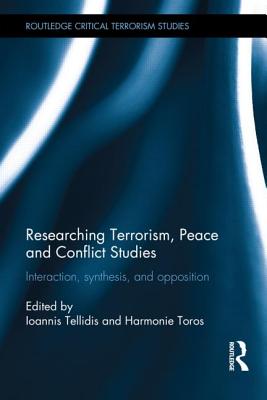
This book examines potential synergies between the fields of Terrorism Studies and Peace and Conflict Studies.
The volume presents theoretically- and empirically-informed contributions, which shed light on whether the two fields can inform each other on issues of mutual interest and importance. The book examines key themes including the conceptualisation(s) of peace and violence; the exceptionalisation of terrorist violence; the relationship between scholarship and political power; the dysfunctionality of the liberal peace and the opportunities offered by post-liberal peacebuilding frameworks; and the implications and challenges of cyber-terrorism and cyber-conflict. Furthermore, the book intends to be a launching pad for future debate on whether the recent 'critical' turn in terrorism studies can offer a pathway for peace studies to engage with the so far largely ignored question of power.
Consisting of not only key scholars but also practitioners and policy makers, the contributors present a number of case studies, including Colombia, Northern Ireland, the Basque Country, and Iraq, where they explore the relationships between terrorism and peace and conflict approaches. They critically analyse the statist approach inherent in both terrorism approaches and liberal peacebuilding frameworks; the role of the grassroots levels of society; the inefficiency of simplistic frameworks of understanding and implementation; and the chains of governance from international (and transnational) actors to national actors and finally from national to local actors.
This book will be of much interest to students of terrorism studies, peace and conflict studies, IR and security studies.
Log in to write a review for this book.
No reviews yet. Be the first to share your opinion.
Biography not available.
Biography not available.