Clark, Gordon L. Author
Biography not available.

Browse all FOLKLORE books
Browse all GARDENS books
Browse all GRAPHIC NOVELS books
Browse all HISTORY - MEDIEVAL books
Browse all HUMOUR books
Browse all Juvenile Fiction : Biographical - Other books
Browse all Juvenile Fiction : Historical - Other books
Browse all Juvenile Fiction : Legends, Myths, & Fables - Other books
Browse all Juvenile Fiction : People & Places - Other books
Browse all Juvenile Fiction : People & Places - United States - Other books
Browse all Juvenile Fiction : Religious - Other books
Browse all Juvenile Nonfiction : History - Other books
Browse all Juvenile Nonfiction : Mathematics - Advanced books
Browse all Juvenile Nonfiction : People & Places - Other books
Browse all Juvenile Nonfiction : People & Places - United States - Othe books
Browse all LITERARY STUDIES books
Browse all LONDON books
Browse all Medical : Nursing - Mental Health books
Browse all MIND books
Browse all MUSEOLOGY books
Browse all NON-CLASSIFIABLE books
Browse all NONLINEAR SCIENCE books
Browse all POPULAR SCIENCE books
Browse all RELIGIOUS STUDIES books
Browse all SPIRIT books
Browse all SPORT books
Browse all TRAVEL WRITING books
 Out of Stock
Hardback · ISBN 9781138101968
Inclusive of GST and other taxes
Arriving at your doorstep in 10-15 days
Our logisitcs team will make sure everyitem is delivered safely
| ISBN | 9781138101968 |
|---|---|
| Publisher | Routledge |
| Publication date | August 2017 |
| Language | English |
| MRP | £145.99 GBP |
| Page count | 368 |
| Item weight | 153 g |
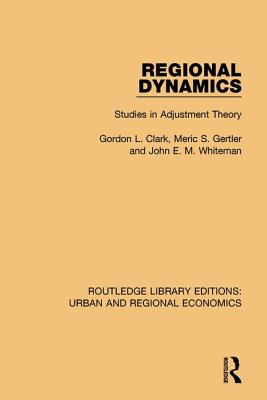
Originally published in 1986. This book is concerned with how regional economies adapt and respond to changing circumstances, and especially with the spatial system and processes of restructuring. Throughout the book there is a methodological commitment to adjustment theory - a unique analytical framework for the study of the dynamics of advanced capitalist economies. Instead of homogenising space in the manner of neoclassical economic theory, the authors focus on adjustment processes that produce and reproduce spatial differentiation.
The most important facets of regional economic structure are covered - employment, wages, prices, migration, and capital investment - in terms of their own dimensions and their connections with the larger theoretical framework. Each part of the book develops one particular dimension of regional adjustment, and each has an overview and summary. Within each part, there is a sequence of related studies focussing on the empirical aspects, theoretical logic, and distributive consequences of regional adjustment.
Log in to write a review for this book.
No reviews yet. Be the first to share your opinion.
Biography not available.
Biography not available.
Biography not available.