Johnson, Donald Leslie Author
Biography not available.

Browse all FOLKLORE books
Browse all GARDENS books
Browse all GRAPHIC NOVELS books
Browse all HISTORY - MEDIEVAL books
Browse all HUMOUR books
Browse all Juvenile Fiction : Biographical - Other books
Browse all Juvenile Fiction : Historical - Other books
Browse all Juvenile Fiction : Legends, Myths, & Fables - Other books
Browse all Juvenile Fiction : People & Places - Other books
Browse all Juvenile Fiction : People & Places - United States - Other books
Browse all Juvenile Fiction : Religious - Other books
Browse all Juvenile Nonfiction : History - Other books
Browse all Juvenile Nonfiction : Mathematics - Advanced books
Browse all Juvenile Nonfiction : People & Places - Other books
Browse all Juvenile Nonfiction : People & Places - United States - Othe books
Browse all LITERARY STUDIES books
Browse all LONDON books
Browse all Medical : Nursing - Mental Health books
Browse all MIND books
Browse all MUSEOLOGY books
Browse all NON-CLASSIFIABLE books
Browse all NONLINEAR SCIENCE books
Browse all POPULAR SCIENCE books
Browse all RELIGIOUS STUDIES books
Browse all SPIRIT books
Browse all SPORT books
Browse all TRAVEL WRITING books
 Out of Stock
Paperback · ISBN 9781138601628
Inclusive of GST and other taxes
Arriving at your doorstep in 10-15 days
Our logisitcs team will make sure everyitem is delivered safely
| ISBN | 9781138601628 |
|---|---|
| Publisher | Routledge |
| Publication date | May 2018 |
| Language | English |
| MRP | £50.99 GBP |
| Page count | 332 |
| Item weight | 121 g |
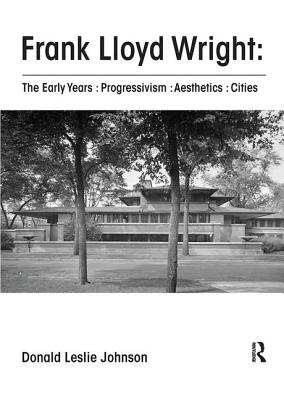
Frank Lloyd Wright: The Early Years: Progressivism: Aesthetics: Cities examines Wright's belief that all aspects of human life must embrace and celebrate an aesthetic experience that would thereby lead to necessary social reforms. Inherent in the theory was a belief that reform of nineteenth-century gluttony should include a contemporary interpretation of its material presence, its bulk and space, its architectural landscape.
This book analyzes Wright's innovative, profound theory of architecture that drew upon geometry and notions of pure design and the indigenous as put into practice. It outlines the design methodology that he applied to domestic and non-domestic buildings and presents reasons for the recognition of two Wright Styles and a Wright School. The book also studies how his design method was applied to city planning and implications of historical and theoretical contexts of the period that surely influenced all of Wright's community and city planning.
Log in to write a review for this book.
No reviews yet. Be the first to share your opinion.
Biography not available.