Huang, Shu-Mei Author
Biography not available.

Browse all FOLKLORE books
Browse all GARDENS books
Browse all GRAPHIC NOVELS books
Browse all HISTORY - MEDIEVAL books
Browse all HUMOUR books
Browse all Juvenile Fiction : Biographical - Other books
Browse all Juvenile Fiction : Historical - Other books
Browse all Juvenile Fiction : Legends, Myths, & Fables - Other books
Browse all Juvenile Fiction : People & Places - Other books
Browse all Juvenile Fiction : People & Places - United States - Other books
Browse all Juvenile Fiction : Religious - Other books
Browse all Juvenile Nonfiction : History - Other books
Browse all Juvenile Nonfiction : Mathematics - Advanced books
Browse all Juvenile Nonfiction : People & Places - Other books
Browse all Juvenile Nonfiction : People & Places - United States - Othe books
Browse all LITERARY STUDIES books
Browse all LONDON books
Browse all Medical : Nursing - Mental Health books
Browse all MIND books
Browse all MUSEOLOGY books
Browse all NON-CLASSIFIABLE books
Browse all NONLINEAR SCIENCE books
Browse all POPULAR SCIENCE books
Browse all RELIGIOUS STUDIES books
Browse all SPIRIT books
Browse all SPORT books
Browse all TRAVEL WRITING books
 Out of Stock
Hardback · ISBN 9781138628182
Inclusive of GST and other taxes
Arriving at your doorstep in 10-15 days
Our logisitcs team will make sure everyitem is delivered safely
| ISBN | 9781138628182 |
|---|---|
| Publisher | Routledge |
| Publication date | September 2019 |
| Language | English |
| MRP | £171.99 GBP |
| Page count | 210 |
| Item weight | 104 g |
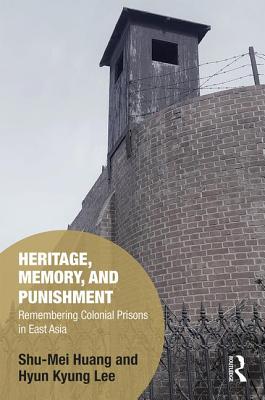
Based on a transnational study of decommissioned, postcolonial prisons in Taiwan (Taipei and Chiayi), South Korea (Seoul), and China (Lushun), this book offers a critical reading of prisons as a particular colonial product, the current restoration of which as national heritage is closely related to the evolving conceptualization of punishment. Focusing on the colonial prisons built by the Japanese Empire in the first half of the twentieth century, it illuminates how punishment has been considered a subject of modernization, while the contemporary use of prisons as heritage tends to reduce the process of colonial modernity to oppression and atrocity - thus constituting a heritage of shame and death, which postcolonial societies blame upon the former colonizers. A study of how the remembering of punishment and imprisonment reflects the attempts of postcolonial cities to re-articulate an understanding of the present by correcting the past, Heritage, Memory, and Punishment examines how prisons were designed, built, partially demolished, preserved, and redeveloped across political regimes, demonstrating the ways in which the selective use of prisons as heritage, reframed through nationalism, leaves marks on urban contexts that remain long after the prisons themselves are decommissioned. As such, it will appeal to scholars of sociology, geography, the built environment, and heritage with interests in memory studies and dark tourism.
Log in to write a review for this book.
No reviews yet. Be the first to share your opinion.
Biography not available.
Biography not available.