Haynes, Felicity Editor
Biography not available.

Browse all FOLKLORE books
Browse all GARDENS books
Browse all GRAPHIC NOVELS books
Browse all HISTORY - MEDIEVAL books
Browse all HUMOUR books
Browse all Juvenile Fiction : Biographical - Other books
Browse all Juvenile Fiction : Historical - Other books
Browse all Juvenile Fiction : Legends, Myths, & Fables - Other books
Browse all Juvenile Fiction : People & Places - Other books
Browse all Juvenile Fiction : People & Places - United States - Other books
Browse all Juvenile Fiction : Religious - Other books
Browse all Juvenile Nonfiction : History - Other books
Browse all Juvenile Nonfiction : Mathematics - Advanced books
Browse all Juvenile Nonfiction : People & Places - Other books
Browse all Juvenile Nonfiction : People & Places - United States - Othe books
Browse all LITERARY STUDIES books
Browse all LONDON books
Browse all Medical : Nursing - Mental Health books
Browse all MIND books
Browse all MUSEOLOGY books
Browse all NON-CLASSIFIABLE books
Browse all NONLINEAR SCIENCE books
Browse all POPULAR SCIENCE books
Browse all RELIGIOUS STUDIES books
Browse all SPIRIT books
Browse all SPORT books
Browse all TRAVEL WRITING books
 Out of Stock
Hardback · ISBN 9781138641105
Inclusive of GST and other taxes
Arriving at your doorstep in 10-15 days
Our logisitcs team will make sure everyitem is delivered safely
| ISBN | 9781138641105 |
|---|---|
| Publisher | Routledge |
| Publication date | March 2016 |
| Language | English |
| MRP | £103.99 GBP |
| Page count | 132 |
| Item weight | 100 g |
In 1972, Matthew Lipman founded the Institute of Advancement for Philosophy for Children (IAPC), producing a series of novels and teaching manuals promoting philosophical inquiry at all levels of schooling. The programme consisted of stories about children discussing traditional topics of ethics, values, logic, reality, perception, and politics, as they related to their own daily experiences. Philosophy for Children has been adapted beyond the IAPC texts, but the process remains one of an open community of inquiry in which teachers promote respect, conceptual clarity, critical judgement, and active listening without imposing their own ideas.
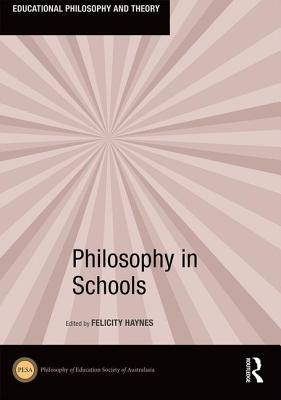
Philosophy in Schools describes the successes and difficulties in implementing this community of inquiry model. The book covers topics including the formation of non-didactic courses in ethics, the difficulties of fitting a post-compulsory philosophy course into a standard curriculum framework, and the political assumptions of adopting this model in a low socio-economic school. The contributions also ask deeper questions about how a genuine community of inquiry model is incompatible with conventional models of schooling, with their positioning of the discipline of philosophy in the curriculum. This book was originally published as a special issue of Educational Philosophy and Theory.
Log in to write a review for this book.
No reviews yet. Be the first to share your opinion.
Biography not available.