Borengasser, Marcus Author
Biography not available.

Browse all FOLKLORE books
Browse all GARDENS books
Browse all GRAPHIC NOVELS books
Browse all HISTORY - MEDIEVAL books
Browse all HUMOUR books
Browse all Juvenile Fiction : Biographical - Other books
Browse all Juvenile Fiction : Historical - Other books
Browse all Juvenile Fiction : Legends, Myths, & Fables - Other books
Browse all Juvenile Fiction : People & Places - Other books
Browse all Juvenile Fiction : People & Places - United States - Other books
Browse all Juvenile Fiction : Religious - Other books
Browse all Juvenile Nonfiction : History - Other books
Browse all Juvenile Nonfiction : Mathematics - Advanced books
Browse all Juvenile Nonfiction : People & Places - Other books
Browse all Juvenile Nonfiction : People & Places - United States - Othe books
Browse all LITERARY STUDIES books
Browse all LONDON books
Browse all Medical : Nursing - Mental Health books
Browse all MIND books
Browse all MUSEOLOGY books
Browse all NON-CLASSIFIABLE books
Browse all NONLINEAR SCIENCE books
Browse all POPULAR SCIENCE books
Browse all RELIGIOUS STUDIES books
Browse all SPIRIT books
Browse all SPORT books
Browse all TRAVEL WRITING books
 Out of Stock
Paperback · ISBN 9781138747180
Inclusive of GST and other taxes
Arriving at your doorstep in 10-15 days
Our logisitcs team will make sure everyitem is delivered safely
| ISBN | 9781138747180 |
|---|---|
| Publisher | CRC Press |
| Publication date | February 2023 |
| Language | English |
| MRP | £82.99 GBP |
| Page count | 128 |
| Item weight | 42 g |
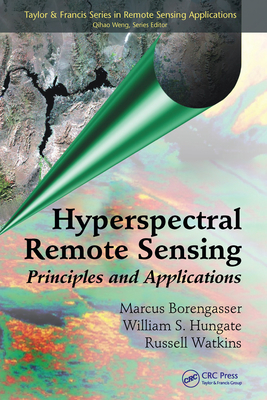
Land management issues, such as mapping tree species, recognizing invasive plants, and identifying key geologic features, require an understanding of complex technical issues before the best decisions can be made. Hyperspectral remote sensing is one the technologies that can help with reliable detection and identification. Presenting the fundamentals of remote sensing at an introductory level, Hyperspectral Remote Sensing: Principles and Applications explores all major aspects of hyperspectral image acquisition, exploitation, interpretation, and applications.
The book begins with several chapters on the basic concepts and underlying principles of remote sensing images. It introduces spectral radiometry concepts, such as radiance, irradiance, flux, and blackbody radiation; covers imaging spectrometers, examining spectral range, full width half maximum (FWHM), resolution, sampling, signal-to-noise ratio (SNR), and multispectral and hyperspectral sensor systems; and addresses atmospheric interactions. The book then discusses information extraction, with chapters covering the underlying physics principles that lead to the creation of an image and the interpretation of the image's information. The final chapters describe case studies that illustrate the use of hyperspectral remote sensing in agriculture, environmental monitoring, forestry, and geology.
After reading this book, you will have a better understanding of how to evaluate different approaches to hyperspectral analyses and to determine which approaches will work for your applications.
Log in to write a review for this book.
No reviews yet. Be the first to share your opinion.
Biography not available.
Biography not available.
Biography not available.