Lenski, Noel Editor
Biography not available.

Browse all FOLKLORE books
Browse all GARDENS books
Browse all GRAPHIC NOVELS books
Browse all HISTORY - MEDIEVAL books
Browse all HUMOUR books
Browse all Juvenile Fiction : Biographical - Other books
Browse all Juvenile Fiction : Historical - Other books
Browse all Juvenile Fiction : Legends, Myths, & Fables - Other books
Browse all Juvenile Fiction : People & Places - Other books
Browse all Juvenile Fiction : People & Places - United States - Other books
Browse all Juvenile Fiction : Religious - Other books
Browse all Juvenile Nonfiction : History - Other books
Browse all Juvenile Nonfiction : Mathematics - Advanced books
Browse all Juvenile Nonfiction : People & Places - Other books
Browse all Juvenile Nonfiction : People & Places - United States - Othe books
Browse all LITERARY STUDIES books
Browse all LONDON books
Browse all Medical : Nursing - Mental Health books
Browse all MIND books
Browse all MUSEOLOGY books
Browse all NON-CLASSIFIABLE books
Browse all NONLINEAR SCIENCE books
Browse all POPULAR SCIENCE books
Browse all RELIGIOUS STUDIES books
Browse all SPIRIT books
Browse all SPORT books
Browse all TRAVEL WRITING books
 Out of Stock
Paperback · ISBN 9781316508039
Inclusive of GST and other taxes
Arriving at your doorstep in 5-7 days
Our logisitcs team will make sure everyitem is delivered safely
| ISBN | 9781316508039 |
|---|---|
| Publisher | Cambridge University Press |
| Publication date | December 2020 |
| Language | English |
| MRP | £38.00 GBP |
| Page count | 528 |
| Item weight | 154 g |
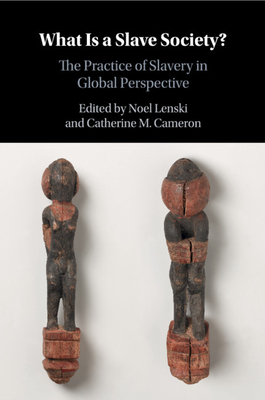
The practice of slavery has been common across a variety of cultures around the globe and throughout history. Despite the multiplicity of slavery's manifestations, many scholars have used a simple binary to categorize slave-holding groups as either 'genuine slave societies' or 'societies with slaves'. This dichotomy, as originally proposed by ancient historian Moses Finley, assumes that there were just five 'genuine slave societies' in all of human history: ancient Greece and Rome, and the colonial Caribbean, Brazil, and the American South. This book interrogates this bedrock of comparative slave studies and tests its worth. Assembling contributions from top specialists, it demonstrates that the catalogue of five must be expanded and that the model may need to be replaced with a more flexible system that emphasizes the notion of intensification. The issue is approached as a question, allowing for debate between the seventeen contributors about how best to conceptualize the comparative study of human bondage.
Log in to write a review for this book.
No reviews yet. Be the first to share your opinion.
Biography not available.
Biography not available.