Stolz, Daniel A. Author
Biography not available.

Browse all FOLKLORE books
Browse all GARDENS books
Browse all GRAPHIC NOVELS books
Browse all HISTORY - MEDIEVAL books
Browse all HUMOUR books
Browse all Juvenile Fiction : Biographical - Other books
Browse all Juvenile Fiction : Historical - Other books
Browse all Juvenile Fiction : Legends, Myths, & Fables - Other books
Browse all Juvenile Fiction : People & Places - Other books
Browse all Juvenile Fiction : People & Places - United States - Other books
Browse all Juvenile Fiction : Religious - Other books
Browse all Juvenile Nonfiction : History - Other books
Browse all Juvenile Nonfiction : Mathematics - Advanced books
Browse all Juvenile Nonfiction : People & Places - Other books
Browse all Juvenile Nonfiction : People & Places - United States - Othe books
Browse all LITERARY STUDIES books
Browse all LONDON books
Browse all Medical : Nursing - Mental Health books
Browse all MIND books
Browse all MUSEOLOGY books
Browse all NON-CLASSIFIABLE books
Browse all NONLINEAR SCIENCE books
Browse all POPULAR SCIENCE books
Browse all RELIGIOUS STUDIES books
Browse all SPIRIT books
Browse all SPORT books
Browse all TRAVEL WRITING books
 Out of Stock
Paperback · ISBN 9781316647257
Inclusive of GST and other taxes
Arriving at your doorstep in 5-7 days
Our logisitcs team will make sure everyitem is delivered safely
| ISBN | 9781316647257 |
|---|---|
| Publisher | Cambridge University Press |
| Publication date | June 2019 |
| Language | English |
| MRP | £38.00 GBP |
| Page count | 332 |
| Item weight | 99 g |
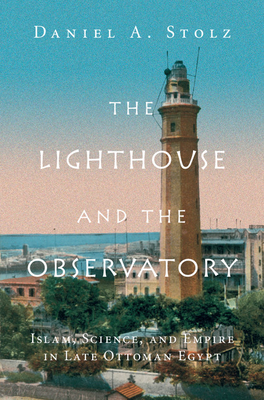
An observatory and a lighthouse form the nexus of this major new investigation of science, religion, and the state in late Ottoman Egypt. Astronomy, imperial bureaucrats, traditionally educated Muslim scholars, and reformist Islamic publications, such as The Lighthouse, are linked to examine the making of knowledge, the performance of piety, and the operation of political power through scientific practice. Contrary to ideas of Islamic scientific decline, Muslim scholars in the nineteenth century used a dynamic tradition of knowledge to measure time, compute calendars, and predict planetary positions. The rise of a 'new astronomy' is revealed to owe much to projects of political and religious reform: from the strengthening of the multiple empires that exercised power over the Nile Valley; to the 'modernization' of Islamic centers of learning; to the dream of a global Islamic community that would rely on scientific institutions to coordinate the timing of major religious duties.
Log in to write a review for this book.
No reviews yet. Be the first to share your opinion.
Biography not available.