Tiacci, Lorenzo Author
Biography not available.

Browse all FOLKLORE books
Browse all GARDENS books
Browse all GRAPHIC NOVELS books
Browse all HISTORY - MEDIEVAL books
Browse all HUMOUR books
Browse all Juvenile Fiction : Biographical - Other books
Browse all Juvenile Fiction : Historical - Other books
Browse all Juvenile Fiction : Legends, Myths, & Fables - Other books
Browse all Juvenile Fiction : People & Places - Other books
Browse all Juvenile Fiction : People & Places - United States - Other books
Browse all Juvenile Fiction : Religious - Other books
Browse all Juvenile Nonfiction : History - Other books
Browse all Juvenile Nonfiction : Mathematics - Advanced books
Browse all Juvenile Nonfiction : People & Places - Other books
Browse all Juvenile Nonfiction : People & Places - United States - Othe books
Browse all LITERARY STUDIES books
Browse all LONDON books
Browse all Medical : Nursing - Mental Health books
Browse all MIND books
Browse all MUSEOLOGY books
Browse all NON-CLASSIFIABLE books
Browse all NONLINEAR SCIENCE books
Browse all POPULAR SCIENCE books
Browse all RELIGIOUS STUDIES books
Browse all SPIRIT books
Browse all SPORT books
Browse all TRAVEL WRITING books
 Out of Stock
Hardback · ISBN 9781326931469
Inclusive of GST and other taxes
Arriving at your doorstep in 10-15 days
Our logisitcs team will make sure everyitem is delivered safely
| ISBN | 9781326931469 |
|---|---|
| Publisher | Lulu.com |
| Publication date | February 2025 |
| Language | English |
| MRP | £49.00 GBP |
| Page count | 210 |
| Item weight | 172 g |
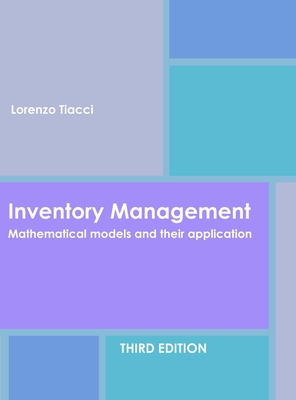
The text, designed for students in Engineering Management or Industrial Engineering degree programs, brings together the mathematical models that underlie the basis of inventory management, a fundamental aspect in the context of production systems. The text aims to provide students with the following skills: - to know the assumptions to which the different models underlie, in order to be able to assess whether they can be applied to the practical case and, in the case of incomplete applicability, to acquire through experience the order of magnitude of the error being made; - to understand the logic by which the models were developed, in order to know how to adapt them to the many cases that arise in reality; - to know how to apply the models numerically, that is, how to use the computational tools and procedures necessary to obtain the quantitative results of interest. To this end, the text describes all the mathematical steps and demonstrations necessary for the development of each model, to which are added numerical examples of the model's application.
Log in to write a review for this book.
No reviews yet. Be the first to share your opinion.
Biography not available.