Chu, Y. Editor
Biography not available.

Browse all FOLKLORE books
Browse all GARDENS books
Browse all GRAPHIC NOVELS books
Browse all HISTORY - MEDIEVAL books
Browse all HUMOUR books
Browse all Juvenile Fiction : Biographical - Other books
Browse all Juvenile Fiction : Historical - Other books
Browse all Juvenile Fiction : Legends, Myths, & Fables - Other books
Browse all Juvenile Fiction : People & Places - Other books
Browse all Juvenile Fiction : People & Places - United States - Other books
Browse all Juvenile Fiction : Religious - Other books
Browse all Juvenile Nonfiction : History - Other books
Browse all Juvenile Nonfiction : Mathematics - Advanced books
Browse all Juvenile Nonfiction : People & Places - Other books
Browse all Juvenile Nonfiction : People & Places - United States - Othe books
Browse all LITERARY STUDIES books
Browse all LONDON books
Browse all Medical : Nursing - Mental Health books
Browse all MIND books
Browse all MUSEOLOGY books
Browse all NON-CLASSIFIABLE books
Browse all NONLINEAR SCIENCE books
Browse all POPULAR SCIENCE books
Browse all RELIGIOUS STUDIES books
Browse all SPIRIT books
Browse all SPORT books
Browse all TRAVEL WRITING books
 Out of Stock
Paperback · ISBN 9781349502332
Inclusive of GST and other taxes
Arriving at your doorstep in 10-15 days
Our logisitcs team will make sure everyitem is delivered safely
| ISBN | 9781349502332 |
|---|---|
| Publisher | Palgrave Macmillan |
| Publication date | January 2015 |
| Language | English |
| MRP | £89.99 GBP |
| Page count | 268 |
| Item weight | 76 g |
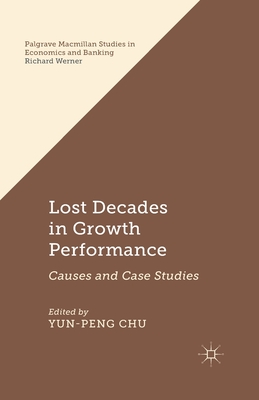
There have been many noticeable incidents of 'lost decades' in economic growth, occurring in countries across the world. It has been found that in many economies, the lost decade phenomenon persists, even after the conventional set of contributing factors such as per capita income, fertility rate, life expectancy, rule of law, educational attainment, ratio of investment to national income, and openness have been taken into account. This book explains where and how these lost decades in economic growth occur in the world. The authors identify that dominant macroeconomic factors contributing to their occurrence are an abnormal supply of credits relative to national income, and poor demand management. The study pays special attention to the cases of Japan, South Korea and Taiwan, exploring their specific cases and analyzing contributing factors. While Japan suffered from excessive credit prior to the bubble bursting, and from insufficient domestic demand subsequently, Korea's growth has been stunted through structural imbalances between and within industries, as well as through changes in the orientation of public policies from growth to equality. Adversely, reduced economic growth in Taiwan has led from its populism-ridden democracy and mass media, as well as from internal disputes over national identity. Lost Decades in Growth Performance provides a revealing insight into the factors affecting economic growth across the world, and will be an invaluable resource for anyone with an interest in global and Asian economics. It also offers a fundamental source of reference for students and academics in general equilibrium models, economic development and East Asian economies.
Log in to write a review for this book.
No reviews yet. Be the first to share your opinion.
Biography not available.