Menander Author
Biography not available.

Browse all FOLKLORE books
Browse all GARDENS books
Browse all GRAPHIC NOVELS books
Browse all HISTORY - MEDIEVAL books
Browse all HUMOUR books
Browse all Juvenile Fiction : Biographical - Other books
Browse all Juvenile Fiction : Historical - Other books
Browse all Juvenile Fiction : Legends, Myths, & Fables - Other books
Browse all Juvenile Fiction : People & Places - Other books
Browse all Juvenile Fiction : People & Places - United States - Other books
Browse all Juvenile Fiction : Religious - Other books
Browse all Juvenile Nonfiction : History - Other books
Browse all Juvenile Nonfiction : Mathematics - Advanced books
Browse all Juvenile Nonfiction : People & Places - Other books
Browse all Juvenile Nonfiction : People & Places - United States - Othe books
Browse all LITERARY STUDIES books
Browse all LONDON books
Browse all Medical : Nursing - Mental Health books
Browse all MIND books
Browse all MUSEOLOGY books
Browse all NON-CLASSIFIABLE books
Browse all NONLINEAR SCIENCE books
Browse all POPULAR SCIENCE books
Browse all RELIGIOUS STUDIES books
Browse all SPIRIT books
Browse all SPORT books
Browse all TRAVEL WRITING books
 Out of Stock
Paperback · ISBN 9781365747182
Inclusive of GST and other taxes
Arriving at your doorstep in 10-15 days
Our logisitcs team will make sure everyitem is delivered safely
| ISBN | 9781365747182 |
|---|---|
| Publisher | Lulu.com |
| Publication date | October 2021 |
| Language | English |
| MRP | £5.64 GBP |
| Page count | 64 |
| Item weight | 24 g |
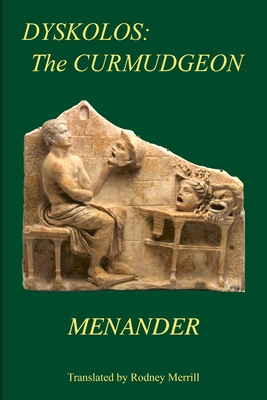
Dyskolos, The Curmudgeon, is the only nearly complete extant play of the Athenian New Comedy. Menander, c. 342/1-c.290 BCE, was the best known among the playwrights of the day; he won first prize eight times at the Lenaia festival, held in late January, including for this play. His work was enormously influential for Roman comedy as we have it from Terence and Plautus, and for such later dramatists as Shakespeare and Molière. This play celebrates in comic mode the season, late winter, in which it was produced, the time when the ground is being broken up for sowing new crops. But its action is so trenchantly and vividly staged that it far transcends its occasion to present a timelessly relevant exploration of relationships in family and society-between brother and sister, parents and children, old and young, masters and servants, rich and poor, city dwellers and country folk. The old Curmudgeon of the title-an alternative given by an ancient source is The Misanthrope-finds that his desire for a self-sufficient existence cannot be sustained in the face of family and social necessities, while the younger people find that erotic desire and civil life cross class and family lines in ways familiar to us. The translation takes primary account of the play's marriage of colloquial language with formal and musical meter, on the conviction that English can pleasurably convey that union. I have closely observed the specific metrical patterning of the lines: the iambic hexameter, one foot longer than English blank verse, of most of the dialogue, and the longer and more elaborate lines of two climactic late passages. At least the second of these was set to music, for the one surviving stage direction, aulei, tell us that an aulos, a double-flute, accompanied the speeches, and this was probably true for the first as well. Like all plays, from Greek tragedy to the latest Broadway production, a fully vocal rendering of the play, bringing out the music and enlivening the characters as they respond to each other, is by far the best way to experience it. But it can also be read with such a performance merely imagined. In either case I hope readers will come away with an appreciation of the brilliance of this ancient but lively comedy.
Log in to write a review for this book.
No reviews yet. Be the first to share your opinion.
Biography not available.
Biography not available.