Shytov, Alexander Nikolaevich Author
Biography not available.

Browse all FOLKLORE books
Browse all GARDENS books
Browse all GRAPHIC NOVELS books
Browse all HISTORY - MEDIEVAL books
Browse all HUMOUR books
Browse all Juvenile Fiction : Biographical - Other books
Browse all Juvenile Fiction : Historical - Other books
Browse all Juvenile Fiction : Legends, Myths, & Fables - Other books
Browse all Juvenile Fiction : People & Places - Other books
Browse all Juvenile Fiction : People & Places - United States - Other books
Browse all Juvenile Fiction : Religious - Other books
Browse all Juvenile Nonfiction : History - Other books
Browse all Juvenile Nonfiction : Mathematics - Advanced books
Browse all Juvenile Nonfiction : People & Places - Other books
Browse all Juvenile Nonfiction : People & Places - United States - Othe books
Browse all LITERARY STUDIES books
Browse all LONDON books
Browse all Medical : Nursing - Mental Health books
Browse all MIND books
Browse all MUSEOLOGY books
Browse all NON-CLASSIFIABLE books
Browse all NONLINEAR SCIENCE books
Browse all POPULAR SCIENCE books
Browse all RELIGIOUS STUDIES books
Browse all SPIRIT books
Browse all SPORT books
Browse all TRAVEL WRITING books
 Out of Stock
CONSCIENCE & LOVE IN MAKING JU
Hardback · ISBN 9781402001680
Inclusive of GST and other taxes
Arriving at your doorstep in 10-15 days
Our logisitcs team will make sure everyitem is delivered safely
| ISBN | 9781402001680 |
|---|---|
| Subtitle | CONSCIENCE & LOVE IN MAKING JU |
| Publisher | Springer |
| Publication date | November 2001 |
| Language | English |
| MRP | £119.99 GBP |
| Page count | 264 |
| Item weight | 121 g |
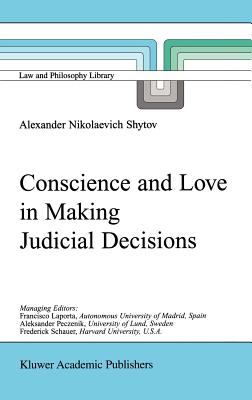
THE CONSCIENCE OF JUDGES AND APPLICA nON OF LEGAL RULES The book is devoted to the problem of the influence of moral judgements on the result of judicial decision-making in the process of application of the established (positive) law. It is the conscience of judges that takes the central place in the research. Conscience is understood in the meaning developed in the theory of Thomas Aquinas as the complex capacity of the human being to make moral judgements which represent acts of reason on the question of what is right or wrong in a particular situation. The reason why we need a theory of conscience in making judicial decisions lies in the nature of the positive law itself. On the one hand, there is an intrinsic conflict between the law as the body of rigid rules and the law as an living experience of those who are involved in social relationships. This conflict particularly finds its expression in the collision of strict justice and equity. The idea of equity does not reject the importance of rules in legal life. What is rejected is an idolatrous attitude to the rules when the uniqueness of a human being, his well- being and happiness are disregarded and sacrificed in order to fulfil the observance of the rules. The rules themselves are neither good or bad. What makes them good or bad is their application.
Log in to write a review for this book.
No reviews yet. Be the first to share your opinion.
Biography not available.