Said, E. Author
Biography not available.

Browse all FOLKLORE books
Browse all GARDENS books
Browse all GRAPHIC NOVELS books
Browse all HISTORY - MEDIEVAL books
Browse all HUMOUR books
Browse all Juvenile Fiction : Biographical - Other books
Browse all Juvenile Fiction : Historical - Other books
Browse all Juvenile Fiction : Legends, Myths, & Fables - Other books
Browse all Juvenile Fiction : People & Places - Other books
Browse all Juvenile Fiction : People & Places - United States - Other books
Browse all Juvenile Fiction : Religious - Other books
Browse all Juvenile Nonfiction : History - Other books
Browse all Juvenile Nonfiction : Mathematics - Advanced books
Browse all Juvenile Nonfiction : People & Places - Other books
Browse all Juvenile Nonfiction : People & Places - United States - Othe books
Browse all LITERARY STUDIES books
Browse all LONDON books
Browse all Medical : Nursing - Mental Health books
Browse all MIND books
Browse all MUSEOLOGY books
Browse all NON-CLASSIFIABLE books
Browse all NONLINEAR SCIENCE books
Browse all POPULAR SCIENCE books
Browse all RELIGIOUS STUDIES books
Browse all SPIRIT books
Browse all SPORT books
Browse all TRAVEL WRITING books
 Out of Stock
Paperback · ISBN 9781403947109
Inclusive of GST and other taxes
Arriving at your doorstep in 10-15 days
Our logisitcs team will make sure everyitem is delivered safely
| ISBN | 9781403947109 |
|---|---|
| Publisher | Palgrave Macmillan |
| Publication date | April 2016 |
| Language | English |
| MRP | £49.99 GBP |
| Page count | 176 |
| Item weight | 51 g |
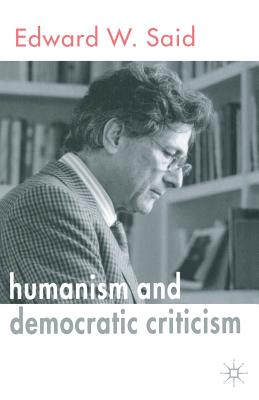
Traditional humanistic education has been under assault for many years. In this, his final book, Edward Said argues that a more democratic form of humanism - one that aims to incorporate, emancipate, and enlighten - is still possible. Proposing an enhanced dialogue between cultural traditions as a strategy for revitalizing the humanities, Said contends that words are vital agents of historical and political change and that reading teaches people to continually question, upset, and reform. By considering the emerging social responsibilities of writers and intellectuals in an ever more interconnected world and pointing out that the canonized thinkers of today were yesterday's revolutionaries, Said makes a persuasive case for humanistic education and a more democratic form of criticism.
Log in to write a review for this book.
No reviews yet. Be the first to share your opinion.
Biography not available.