Murphy, Martin J. Editor
Biography not available.

Browse all FOLKLORE books
Browse all GARDENS books
Browse all GRAPHIC NOVELS books
Browse all HISTORY - MEDIEVAL books
Browse all HUMOUR books
Browse all Juvenile Fiction : Biographical - Other books
Browse all Juvenile Fiction : Historical - Other books
Browse all Juvenile Fiction : Legends, Myths, & Fables - Other books
Browse all Juvenile Fiction : People & Places - Other books
Browse all Juvenile Fiction : People & Places - United States - Other books
Browse all Juvenile Fiction : Religious - Other books
Browse all Juvenile Nonfiction : History - Other books
Browse all Juvenile Nonfiction : Mathematics - Advanced books
Browse all Juvenile Nonfiction : People & Places - Other books
Browse all Juvenile Nonfiction : People & Places - United States - Othe books
Browse all LITERARY STUDIES books
Browse all LONDON books
Browse all Medical : Nursing - Mental Health books
Browse all MIND books
Browse all MUSEOLOGY books
Browse all NON-CLASSIFIABLE books
Browse all NONLINEAR SCIENCE books
Browse all POPULAR SCIENCE books
Browse all RELIGIOUS STUDIES books
Browse all SPIRIT books
Browse all SPORT books
Browse all TRAVEL WRITING books
 Out of Stock
Hardback · ISBN 9781439821930
Inclusive of GST and other taxes
Arriving at your doorstep in 10-15 days
Our logisitcs team will make sure everyitem is delivered safely
| ISBN | 9781439821930 |
|---|---|
| Publisher | CRC Press |
| Publication date | December 2011 |
| Language | English |
| MRP | £210.00 GBP |
| Page count | 166 |
| Item weight | 150 g |
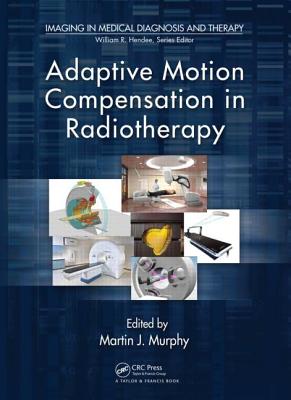
External-beam radiotherapy has long been challenged by the simple fact that patients can (and do) move during the delivery of radiation. Recent advances in imaging and beam delivery technologies have made the solution--adapting delivery to natural movement--a practical reality. Adaptive Motion Compensation in Radiotherapy provides the first detailed treatment of online interventional techniques for motion compensation radiotherapy.
This authoritative book discusses:
Medical therapy with external beams of radiation began as a two-dimensional technology in a three-dimensional world. However, in all but a limited number of scenarios, movement introduces the fourth dimension of time to the treatment problem. Motion-adaptive radiation therapy represents a truly four-dimensional solution to an inherently four-dimensional problem. From these chapters, readers will gain not only an understanding of the technical aspects and capabilities of motion adaptation but also practical clinical insights into planning and carrying out various types of motion-adaptive radiotherapy treatment.
Log in to write a review for this book.
No reviews yet. Be the first to share your opinion.
Biography not available.