Harre, Rom Editor
Biography not available.

Browse all FOLKLORE books
Browse all GARDENS books
Browse all GRAPHIC NOVELS books
Browse all HISTORY - MEDIEVAL books
Browse all HUMOUR books
Browse all Juvenile Fiction : Biographical - Other books
Browse all Juvenile Fiction : Historical - Other books
Browse all Juvenile Fiction : Legends, Myths, & Fables - Other books
Browse all Juvenile Fiction : People & Places - Other books
Browse all Juvenile Fiction : People & Places - United States - Other books
Browse all Juvenile Fiction : Religious - Other books
Browse all Juvenile Nonfiction : History - Other books
Browse all Juvenile Nonfiction : Mathematics - Advanced books
Browse all Juvenile Nonfiction : People & Places - Other books
Browse all Juvenile Nonfiction : People & Places - United States - Othe books
Browse all LITERARY STUDIES books
Browse all LONDON books
Browse all Medical : Nursing - Mental Health books
Browse all MIND books
Browse all MUSEOLOGY books
Browse all NON-CLASSIFIABLE books
Browse all NONLINEAR SCIENCE books
Browse all POPULAR SCIENCE books
Browse all RELIGIOUS STUDIES books
Browse all SPIRIT books
Browse all SPORT books
Browse all TRAVEL WRITING books
 Out of Stock
Hardback · ISBN 9781440831782
Inclusive of GST and other taxes
Arriving at your doorstep in 10-15 days
Our logisitcs team will make sure everyitem is delivered safely
| ISBN | 9781440831782 |
|---|---|
| Publisher | Praeger |
| Publication date | January 2016 |
| Language | English |
| MRP | £75.00 GBP |
| Page count | 434 |
| Item weight | 173 g |
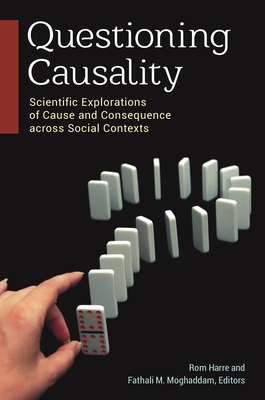
Covering a topic applicable to fields ranging from education to health care to psychology, this book provides a broad critical analysis of the assumptions that researchers and practitioners have about causation and explains how readers can improve their thinking about causation.
In virtually every laboratory, research center, or classroom focused on the social or physical sciences today, the concept of causation is a core issue to be questioned, tested, and determined. Even debates in unrelated areas such as biology, law, and philosophy often focus on causality--"What made that happen?" In this book, experts from across disciplines adopt a reader-friendly approach to reconsider this age-old question in a modern light, defining different kinds of causation and examining how causes and consequences are framed and approached in a particular field. Each chapter uses applied examples to illustrate key points in an accessible manner.
The contributors to this work supply a coherent critical analysis of the assumptions researchers and practitioners hold about causation, and explain how such thinking about causation can be improved. Collectively, the coverage is broad, providing readers with a fuller picture of research in social contexts. Beyond providing insightful description and thought-provoking questioning of causation in different research areas, the book applies analysis of data in order to point the way to smarter, more efficient practices. Consequently, both practitioners and researchers will benefit from this book.
Log in to write a review for this book.
No reviews yet. Be the first to share your opinion.
Biography not available.
Biography not available.