Lyon, Edward G. Author
Biography not available.

Browse all FOLKLORE books
Browse all GARDENS books
Browse all GRAPHIC NOVELS books
Browse all HISTORY - MEDIEVAL books
Browse all HUMOUR books
Browse all Juvenile Fiction : Biographical - Other books
Browse all Juvenile Fiction : Historical - Other books
Browse all Juvenile Fiction : Legends, Myths, & Fables - Other books
Browse all Juvenile Fiction : People & Places - Other books
Browse all Juvenile Fiction : People & Places - United States - Other books
Browse all Juvenile Fiction : Religious - Other books
Browse all Juvenile Nonfiction : History - Other books
Browse all Juvenile Nonfiction : Mathematics - Advanced books
Browse all Juvenile Nonfiction : People & Places - Other books
Browse all Juvenile Nonfiction : People & Places - United States - Othe books
Browse all LITERARY STUDIES books
Browse all LONDON books
Browse all Medical : Nursing - Mental Health books
Browse all MIND books
Browse all MUSEOLOGY books
Browse all NON-CLASSIFIABLE books
Browse all NONLINEAR SCIENCE books
Browse all POPULAR SCIENCE books
Browse all RELIGIOUS STUDIES books
Browse all SPIRIT books
Browse all SPORT books
Browse all TRAVEL WRITING books
 Out of Stock
Paperback · ISBN 9781442231269
Inclusive of GST and other taxes
Arriving at your doorstep in 10-15 days
Our logisitcs team will make sure everyitem is delivered safely
| ISBN | 9781442231269 |
|---|---|
| Publisher | Rowman & Littlefield Publishers |
| Publication date | June 2016 |
| Language | English |
| MRP | £41.99 GBP |
| Page count | 258 |
| Item weight | 85 g |
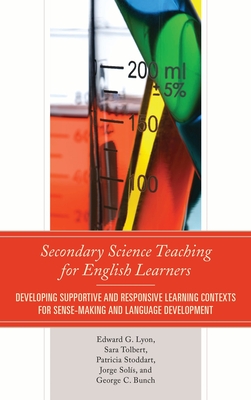
Secondary Science Teaching for English Learners: Developing Supportive and Responsive Learning Context for Sense-making and Language Development provides a resource for multiple audiences, including pre- and in-service secondary science teachers, science teacher educators, instructional coaches, curriculum specialists, and administrators, to learn about a research-based approach to teaching science that responds to the growing population of English learners in the United States.
The book offers clear definitions of pedagogical practices supported by classroom examples and a cohesive framework for teaching science in linguistically diverse classrooms. The Secondary Science Teaching with English Language and Literacy Acquisition (or SSTELLA) Framework addresses how learning science is enhanced through meaningful and relevant learning experiences that integrate discipline-specific literacy. In particular, four core science teaching practices are described: (1) contextualized science activity, (2) scientific sense-making through scientific and engineering practices, (3) scientific discourse, and (4) English language and disciplinary literacy development. These four core practices are supported by sound theory and research based on unscripted guidelines and flexible modifications of science lessons. Moreover, the four interrelated practices promote students' use of core science ideas while reading, writing, talking, and doing science, thus reflecting principles from Next Generation Science Standards, Common Core State Standards for English Language Arts, and English language proficiency standards. Secondary Science Teaching provides readers with a historical and theoretical basis for integrating language, literacy, and science in multilingual science classrooms, and well as explicit models and guided support teachers in enacting effective teaching practices in the classroom, including comparative vignettes to distinguish between different types of classroom practice.
Log in to write a review for this book.
No reviews yet. Be the first to share your opinion.
Biography not available.
Biography not available.
Biography not available.