Hall, Roy Author
Biography not available.

Browse all FOLKLORE books
Browse all GARDENS books
Browse all GRAPHIC NOVELS books
Browse all HISTORY - MEDIEVAL books
Browse all HUMOUR books
Browse all Juvenile Fiction : Biographical - Other books
Browse all Juvenile Fiction : Historical - Other books
Browse all Juvenile Fiction : Legends, Myths, & Fables - Other books
Browse all Juvenile Fiction : People & Places - Other books
Browse all Juvenile Fiction : People & Places - United States - Other books
Browse all Juvenile Fiction : Religious - Other books
Browse all Juvenile Nonfiction : History - Other books
Browse all Juvenile Nonfiction : Mathematics - Advanced books
Browse all Juvenile Nonfiction : People & Places - Other books
Browse all Juvenile Nonfiction : People & Places - United States - Othe books
Browse all LITERARY STUDIES books
Browse all LONDON books
Browse all Medical : Nursing - Mental Health books
Browse all MIND books
Browse all MUSEOLOGY books
Browse all NON-CLASSIFIABLE books
Browse all NONLINEAR SCIENCE books
Browse all POPULAR SCIENCE books
Browse all RELIGIOUS STUDIES books
Browse all SPIRIT books
Browse all SPORT books
Browse all TRAVEL WRITING books
 Out of Stock
ILLUMINATION & COLOR IN COMPUT
Paperback · ISBN 9781461281412
Inclusive of GST and other taxes
Arriving at your doorstep in 10-15 days
Our logisitcs team will make sure everyitem is delivered safely
| ISBN | 9781461281412 |
|---|---|
| Subtitle | ILLUMINATION & COLOR IN COMPUT |
| Publisher | Springer |
| Publication date | September 2011 |
| Language | English |
| MRP | £44.99 GBP |
| Page count | 300 |
| Item weight | 94 g |
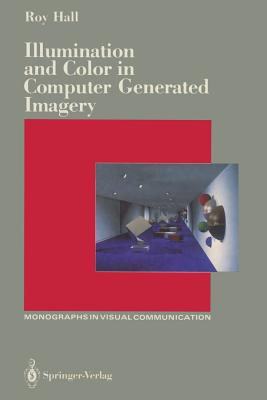
In a very broad sense the historical development of computer graphics can be considered in three phases, each a giant step down the road towards "realistic" computer generated images. The first, during the late 1960's and early 1970's, can perhaps be characterized as the "wire frame" era. Basically pictures were composed of lines. Considerable em- phasis was placed on "real time" interactive manipulation of the model. As models became more complex and as raster technology developed, eliminating the hidden lines or hidden surfaces from the image became critical for visual understanding. This requirement resulted in the second phase of computer graphics, the "hidden surface" era, that developed during the 1970's and early 1980's. The names associated with hidden surface algorithms read like a who's who of computer graphics. The cul- mination of the hidden surface era and the beginning of the current and third era in computer graphics, the "rendering" era, was Turner Whitted's incorporation of a global illumination model into the ray trac- ing algorithm. Now the goal was not just to generate an image, but to generate a realistic appearing image.
Log in to write a review for this book.
No reviews yet. Be the first to share your opinion.
Biography not available.