World Bank Group Author
Biography not available.

Browse all FOLKLORE books
Browse all GARDENS books
Browse all GRAPHIC NOVELS books
Browse all HISTORY - MEDIEVAL books
Browse all HUMOUR books
Browse all Juvenile Fiction : Biographical - Other books
Browse all Juvenile Fiction : Historical - Other books
Browse all Juvenile Fiction : Legends, Myths, & Fables - Other books
Browse all Juvenile Fiction : People & Places - Other books
Browse all Juvenile Fiction : People & Places - United States - Other books
Browse all Juvenile Fiction : Religious - Other books
Browse all Juvenile Nonfiction : History - Other books
Browse all Juvenile Nonfiction : Mathematics - Advanced books
Browse all Juvenile Nonfiction : People & Places - Other books
Browse all Juvenile Nonfiction : People & Places - United States - Othe books
Browse all LITERARY STUDIES books
Browse all LONDON books
Browse all Medical : Nursing - Mental Health books
Browse all MIND books
Browse all MUSEOLOGY books
Browse all NON-CLASSIFIABLE books
Browse all NONLINEAR SCIENCE books
Browse all POPULAR SCIENCE books
Browse all RELIGIOUS STUDIES books
Browse all SPIRIT books
Browse all SPORT books
Browse all TRAVEL WRITING books
 Out of Stock
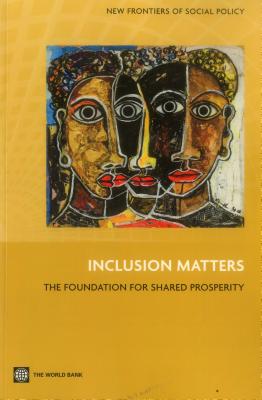
INCLUSION MATTERS
Paperback · ISBN 9781464800108
Inclusive of GST and other taxes
Arriving at your doorstep in 10-15 days
Our logisitcs team will make sure everyitem is delivered safely
| ISBN | 9781464800108 |
|---|---|
| Subtitle | INCLUSION MATTERS |
| Publisher | World Bank Publications |
| Publication date | October 2013 |
| Language | English |
| MRP | £20.99 GBP |
| Page count | 300 |
| Item weight | 89 g |
This report tries to put boundaries around the abstraction that is "social inclusion". It is intended for policy makers, academics, activists and development partners - indeed anyone who is curious about how to address inclusion in a world that is witness to intense demographic, spatial, economic and technological transitions. Placing the discussion of social inclusion within such global transitions and transformations, it argues that social inclusion is an evolving agenda. While it does not purport to provide definitive answers as to how to achieve social inclusion in any given context, the report offers an easy-to-use definition and a framework to assist practitioners in asking, outlining and developing some of the right questions that can help advance the agenda of inclusion in different contexts. There are seven main messages in this report: 1. Excluded groups exist in all countries. 2. Excluded groups are consistently denied opportunities. 3. Intense global transitions are leading to social transformations that create new opportunities for inclusion as well as exacerbating existing forms of exclusion. 4. People take part in society through markets, services, and spaces. 5. Social and economic transformations affect the attitudes and perceptions of people. As people act on the basis of how they feel, it is important to pay attention to their attitudes and perceptions. 6. Exclusion is not immutable. Abundant evidence demonstrates that social inclusion can be planned and achieved. 7. Moving ahead will require a broader and deeper knowledge of exclusion and its impacts as well as taking concerted action.
Log in to write a review for this book.
No reviews yet. Be the first to share your opinion.
Biography not available.