Wang, Huihui Author
Biography not available.

Browse all FOLKLORE books
Browse all GARDENS books
Browse all GRAPHIC NOVELS books
Browse all HISTORY - MEDIEVAL books
Browse all HUMOUR books
Browse all Juvenile Fiction : Biographical - Other books
Browse all Juvenile Fiction : Historical - Other books
Browse all Juvenile Fiction : Legends, Myths, & Fables - Other books
Browse all Juvenile Fiction : People & Places - Other books
Browse all Juvenile Fiction : People & Places - United States - Other books
Browse all Juvenile Fiction : Religious - Other books
Browse all Juvenile Nonfiction : History - Other books
Browse all Juvenile Nonfiction : Mathematics - Advanced books
Browse all Juvenile Nonfiction : People & Places - Other books
Browse all Juvenile Nonfiction : People & Places - United States - Othe books
Browse all LITERARY STUDIES books
Browse all LONDON books
Browse all Medical : Nursing - Mental Health books
Browse all MIND books
Browse all MUSEOLOGY books
Browse all NON-CLASSIFIABLE books
Browse all NONLINEAR SCIENCE books
Browse all POPULAR SCIENCE books
Browse all RELIGIOUS STUDIES books
Browse all SPIRIT books
Browse all SPORT books
Browse all TRAVEL WRITING books
 Out of Stock
Paperback · ISBN 9781464808159
Inclusive of GST and other taxes
Arriving at your doorstep in 10-15 days
Our logisitcs team will make sure everyitem is delivered safely
| ISBN | 9781464808159 |
|---|---|
| Publisher | World Bank Publications |
| Publication date | April 2016 |
| Language | English |
| MRP | £27.99 GBP |
| Page count | 120 |
| Item weight | 49 g |
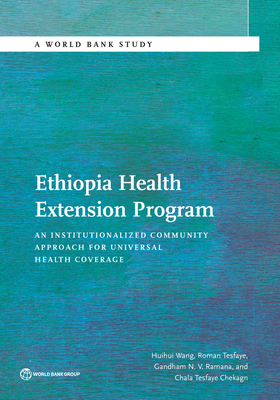
As a low-income country, Ethiopia has made impressive progress in improving health outcomes. This report examines how Ethiopia's Health Extension Program (HEP) has contributed to the country's move toward Univeral Health Coverage (UHC), and to shed light on how other countries may learn from Ethiopia's experiences of HEP when designing their own path to UHC. HEP is one of the government's UHC strategies introduced in a context of limited resources and low coverage of essential health services. The key aspects of the program include the capacity building and mobilization of more than 30, 000 Health Extension Workers (HEWs) targeting more than 12 million model families, and the mobilization of "health development army" to support the community-based health system. Using the HEP-UHC conceptual model and data from Demographic and Health Surveys, the study examines how the HEP has contributed to the country's move toward UHC. During the period that the HEP has been implemented, the country has experienced significant improvements in many dimensions: in terms of socioeconomic, psychological, behavioral, and biological dimensions of the beneficiaries; and in terms of the coverage of health care services. The study finds an accelerated rate of improvements among the rural, less-educated, and the poor population, which is leading to an overall reduction in equity gaps and improvements in the equity indicators - including the concentration indices - that suggest a more equitable distribution of resources and health outcomes. The HEP in Ethiopia has demonstrated that an institutionalized community approach is effective in helping a country make progress toward UHC. The elements of success in the HEP include the emphasis on community mobilization which identifies community priorities, engages and empowers community members, and supports their ability to solve local problems. The other aspect of HEP is the emphasis on institutionalization of the activities, which addresses the sustainability of community programs through high level of political commitment, and effective coordination of national policies and leveraging of support from partners. These findings may offer useful lessons for other low income countries facing similar challenges in developing and implementing a sustainable UHC strategy.
Log in to write a review for this book.
No reviews yet. Be the first to share your opinion.
Biography not available.
Biography not available.
Biography not available.