von Stackelberg, Katherine Author
Biography not available.

Browse all FOLKLORE books
Browse all GARDENS books
Browse all GRAPHIC NOVELS books
Browse all HISTORY - MEDIEVAL books
Browse all HUMOUR books
Browse all Juvenile Fiction : Biographical - Other books
Browse all Juvenile Fiction : Historical - Other books
Browse all Juvenile Fiction : Legends, Myths, & Fables - Other books
Browse all Juvenile Fiction : People & Places - Other books
Browse all Juvenile Fiction : People & Places - United States - Other books
Browse all Juvenile Fiction : Religious - Other books
Browse all Juvenile Nonfiction : History - Other books
Browse all Juvenile Nonfiction : Mathematics - Advanced books
Browse all Juvenile Nonfiction : People & Places - Other books
Browse all Juvenile Nonfiction : People & Places - United States - Othe books
Browse all LITERARY STUDIES books
Browse all LONDON books
Browse all Medical : Nursing - Mental Health books
Browse all MIND books
Browse all MUSEOLOGY books
Browse all NON-CLASSIFIABLE books
Browse all NONLINEAR SCIENCE books
Browse all POPULAR SCIENCE books
Browse all RELIGIOUS STUDIES books
Browse all SPIRIT books
Browse all SPORT books
Browse all TRAVEL WRITING books
 Out of Stock
Paperback · ISBN 9781464818196
Inclusive of GST and other taxes
Arriving at your doorstep in 10-15 days
Our logisitcs team will make sure everyitem is delivered safely
| ISBN | 9781464818196 |
|---|---|
| Publisher | World Bank Publications |
| Publication date | June 2022 |
| Language | English |
| MRP | £34.00 GBP |
| Page count | 122 |
| Item weight | 91 g |
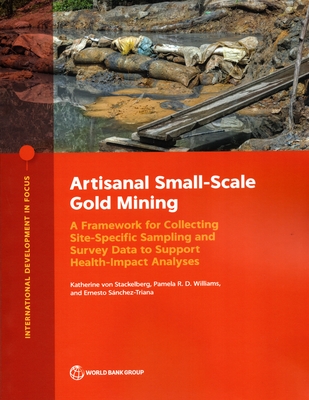
This framework document provides a pragmatic approach for designing representative studies and developing uniform sampling guidelines to support estimates of morbidity that are explicitly linked to exposure to land-based contaminants from artisanal small-scale gold mining (ASGM) activities. A primary goal is to support environmental burden-of-disease evaluations, which attempt to attribute health outcomes to specific sources of pollution. The guidelines provide recommendations on the most appropriate and cost-effective sampling and analysis methods to ensure the collection of representative population-level data, sample size recommendations for each contaminant and environmental media, biological-sampling data, household-survey data, and health-outcome data. This framework focuses on ASGM activities that are known to use and generate mercury (Hg) as well as other metals, such as arsenic (As) and lead (Pb), depending on the specific ores being mined. A particular concern with Hg is the conversion to methylmercury (MeHg) in aquatic environments, leading to bioaccumulation and biomagnification in fish that may be locally consumed. Exposures to Hg, MeHg, and Pb are strongly associated with neurodevelopmental health outcomes in children. Exposures to Hg and MeHg are also associated with neurological illnesses in adults. Exposures to Pb are associated with renal outcomes in children and adults, and cardiovascular outcomes in adults. Exposures to As are associated with neurodevelopmental health outcomes in children, arsenicosis and skin disorders in children and adults, and potential cancers in adults, including skin, bladder, and lung. The primary objective of this framework is to guide research to assess the relationship between environmental contamination, exposures, and health outcomes related to a subset of contaminants originating from ASGM activities for particularly vulnerable populations (such as children) and the general population within a single household in the vicinity of ASGM sites in low- and medium-income countries. To achieve this objective, biomonitoring and health-outcome data are linked to household-survey and environmental data (for example, soil, dust, water, agricultural products, and fish) at the individual level from an exposed population compared to individuals from an unexposed (reference) population. Data on exposures and health outcomes in the same individual across a representative set of individuals is required to support an understanding of the potential impact of ASGM activities on local populations. These guidelines can also assist in building local capacity to conduct environmental assessments following a consistent methodology to facilitate comparability across ASGM sites in different geographic areas. Sampling strategies and methods are prioritized given information needs, resource availability, and other constraints or considerations. The framework includes a number of supporting appendixes that provide additional resources and references on relevant topics.
Log in to write a review for this book.
No reviews yet. Be the first to share your opinion.
Biography not available.
Biography not available.
Biography not available.