Furda, Ivan Editor
Biography not available.

Browse all FOLKLORE books
Browse all GARDENS books
Browse all GRAPHIC NOVELS books
Browse all HISTORY - MEDIEVAL books
Browse all HUMOUR books
Browse all Juvenile Fiction : Biographical - Other books
Browse all Juvenile Fiction : Historical - Other books
Browse all Juvenile Fiction : Legends, Myths, & Fables - Other books
Browse all Juvenile Fiction : People & Places - Other books
Browse all Juvenile Fiction : People & Places - United States - Other books
Browse all Juvenile Fiction : Religious - Other books
Browse all Juvenile Nonfiction : History - Other books
Browse all Juvenile Nonfiction : Mathematics - Advanced books
Browse all Juvenile Nonfiction : People & Places - Other books
Browse all Juvenile Nonfiction : People & Places - United States - Othe books
Browse all LITERARY STUDIES books
Browse all LONDON books
Browse all Medical : Nursing - Mental Health books
Browse all MIND books
Browse all MUSEOLOGY books
Browse all NON-CLASSIFIABLE books
Browse all NONLINEAR SCIENCE books
Browse all POPULAR SCIENCE books
Browse all RELIGIOUS STUDIES books
Browse all SPIRIT books
Browse all SPORT books
Browse all TRAVEL WRITING books
 Out of Stock
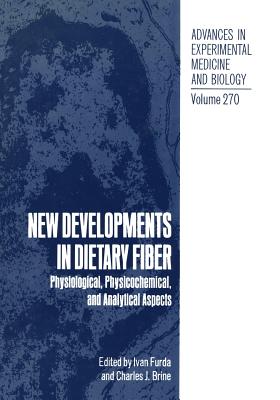
NEW DEVELOPMENTS IN DIETARY FI
Paperback · ISBN 9781468457865
Inclusive of GST and other taxes
Arriving at your doorstep in 10-15 days
Our logisitcs team will make sure everyitem is delivered safely
| ISBN | 9781468457865 |
|---|---|
| Subtitle | NEW DEVELOPMENTS IN DIETARY FI |
| Publisher | Springer |
| Publication date | March 2012 |
| Language | English |
| MRP | £44.99 GBP |
| Page count | 340 |
| Item weight | 131 g |
It has been acknowledged that the physiological effects of dietary fiber are an exceedingly complex matter which requires a multidisciplinary research effort. The increased scientific involvement of the medical community, nutritionists, chemists and physicists is not only warranted but it has become mandatory. This is because we are entering a more advanced research phase in which the observed . in vivo effects should not be only recorded, but they should be systematically correlated with the physicochemical and analytical properties of the individual dietary fibers. The Division of Agricultural and Food Chemistry of the American Chemical Society has recognized this for some time, and has asked us to organize another International Symposium, similar to one in 1982, which would address the latest developments in this field. We decided to ask a cross section of leading experts from industrial and academic research institutions to assess the state of the art in dietary fiber, namely in the areas of the physiological effects, physicochemical attributes, and in existing and proposed analytical methods. We also felt that chemistry and physical chemistry should playa greater role in fiber research to complement and better explain the existing . in vivo data. There is a large volume of animal and human physiological and nutritional data available. Unfortunately, the generated information is frequently confusing. One reason is that this research is not conducted with well characterized compounds, but rather with loosely defined complex mixtures or entities.
Log in to write a review for this book.
No reviews yet. Be the first to share your opinion.
Biography not available.
Biography not available.
Biography not available.