Hösle, Vittorio Author
Biography not available.

Browse all FOLKLORE books
Browse all GARDENS books
Browse all GRAPHIC NOVELS books
Browse all HISTORY - MEDIEVAL books
Browse all HUMOUR books
Browse all Juvenile Fiction : Biographical - Other books
Browse all Juvenile Fiction : Historical - Other books
Browse all Juvenile Fiction : Legends, Myths, & Fables - Other books
Browse all Juvenile Fiction : People & Places - Other books
Browse all Juvenile Fiction : People & Places - United States - Other books
Browse all Juvenile Fiction : Religious - Other books
Browse all Juvenile Nonfiction : History - Other books
Browse all Juvenile Nonfiction : Mathematics - Advanced books
Browse all Juvenile Nonfiction : People & Places - Other books
Browse all Juvenile Nonfiction : People & Places - United States - Othe books
Browse all LITERARY STUDIES books
Browse all LONDON books
Browse all Medical : Nursing - Mental Health books
Browse all MIND books
Browse all MUSEOLOGY books
Browse all NON-CLASSIFIABLE books
Browse all NONLINEAR SCIENCE books
Browse all POPULAR SCIENCE books
Browse all RELIGIOUS STUDIES books
Browse all SPIRIT books
Browse all SPORT books
Browse all TRAVEL WRITING books
 Out of Stock
Paperback · ISBN 9781474221122
Inclusive of GST and other taxes
Arriving at your doorstep in 10-15 days
Our logisitcs team will make sure everyitem is delivered safely
| ISBN | 9781474221122 |
|---|---|
| Publisher | Bloomsbury 3PL |
| Publication date | July 2016 |
| Language | English |
| MRP | £24.99 GBP |
| Page count | 214 |
| Item weight | 56 g |
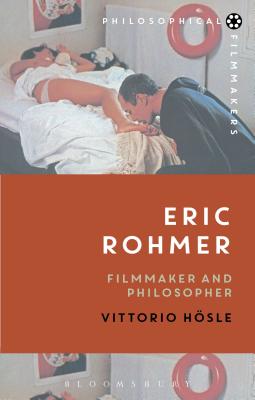
Rohmer is one of the most popular French directors of the second half of the 20th century, one of the members of the famous Nouvelle Vague that reconstituted French cinema based on the theoretical principles articulated in the Cahiers du Cinéma - from whose editorship he was fired when the conservative Catholic opposed its turn toward politicization. Like some of his colleagues, Rohmer is extremely interested in both the history and the philosophy of film: Brother of the noted French philosopher René Scherer, he begins his career as a film critic In his films, deep moral conflicts as well as the search for one's own identity emerge from the intricacies of seemingly superficial everyday life interactions, particularly between a man and a woman.
Hösle's book puts Rohmer in the context of a long French tradition of reflected eroticism, with Marivaux, Musset, Stendhal, and Jean Renoir as crucial figures, and shows how Rohmer both recognizes the inner logic of eroticism and subjects it to moral demands that he inherits from his Catholic background. For Rohmer, the tension between the two can usually only be solved by some unexpected event that can be interpreted as an equivalent of grace.
Log in to write a review for this book.
No reviews yet. Be the first to share your opinion.
Biography not available.