Welch, Alan H. Editor
Biography not available.

Browse all FOLKLORE books
Browse all GARDENS books
Browse all GRAPHIC NOVELS books
Browse all HISTORY - MEDIEVAL books
Browse all HUMOUR books
Browse all Juvenile Fiction : Biographical - Other books
Browse all Juvenile Fiction : Historical - Other books
Browse all Juvenile Fiction : Legends, Myths, & Fables - Other books
Browse all Juvenile Fiction : People & Places - Other books
Browse all Juvenile Fiction : People & Places - United States - Other books
Browse all Juvenile Fiction : Religious - Other books
Browse all Juvenile Nonfiction : History - Other books
Browse all Juvenile Nonfiction : Mathematics - Advanced books
Browse all Juvenile Nonfiction : People & Places - Other books
Browse all Juvenile Nonfiction : People & Places - United States - Othe books
Browse all LITERARY STUDIES books
Browse all LONDON books
Browse all Medical : Nursing - Mental Health books
Browse all MIND books
Browse all MUSEOLOGY books
Browse all NON-CLASSIFIABLE books
Browse all NONLINEAR SCIENCE books
Browse all POPULAR SCIENCE books
Browse all RELIGIOUS STUDIES books
Browse all SPIRIT books
Browse all SPORT books
Browse all TRAVEL WRITING books
 Out of Stock
ARSENIC IN GROUND WATER SOFTCO
Paperback · ISBN 9781475777635
Inclusive of GST and other taxes
Arriving at your doorstep in 10-15 days
Our logisitcs team will make sure everyitem is delivered safely
| ISBN | 9781475777635 |
|---|---|
| Subtitle | ARSENIC IN GROUND WATER SOFTCO |
| Publisher | Springer |
| Publication date | March 2013 |
| Language | English |
| MRP | £89.99 GBP |
| Page count | 492 |
| Item weight | 144 g |
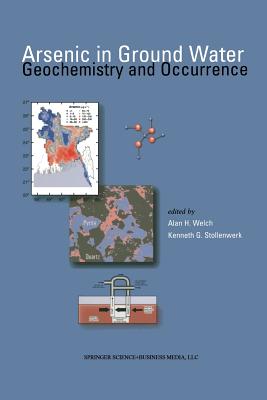
Interest in arsenic in ground water has greatly increased in the past decade because of the increased awareness of human health effects and the costs of avoidance or treatment of ground water supplies used for consumption. The goal of this book is to provide a description of the basic processes that affect arsenic occurrence and transport by providing sufficient background information on arsenic geochemistry and descriptions of hi- arsenic ground water, both affected and unaffected by human activity. An understanding of thermodynamics, adsorption, and the speciation of arsenic in solid phases, which are described in first three chapters, is needed to predict the fate of arsenic in ground water systems. Large-scale and deep movement of ground water can and has redistributed arsenic in the near surface environment, as described in the next two chapters. These large-scale systems can affect large volumes of both ground water and surface water, such as in the Yellowstone system, and can produce mineralised zones that subsequently release arsenic to ground water supplies. Regional identification of high-arsenic ground water and its consumption as described in the next three chapters clearly demonstrates a need for increased wat- quality monitoring, particularly in south and southeast Asia. Chapters 9-11 provide examples of high arsenic ground water associated with sulfide mineral oxidation and alkaline conditions. Finally, smaller scale studies of the effects of human activities that have produced high-arsenic ground water and methods for attenuation of ground water are presented.
Log in to write a review for this book.
No reviews yet. Be the first to share your opinion.
Biography not available.
Biography not available.