Cordelli, Chiara Editor
Biography not available.

Browse all FOLKLORE books
Browse all GARDENS books
Browse all GRAPHIC NOVELS books
Browse all HISTORY - MEDIEVAL books
Browse all HUMOUR books
Browse all Juvenile Fiction : Biographical - Other books
Browse all Juvenile Fiction : Historical - Other books
Browse all Juvenile Fiction : Legends, Myths, & Fables - Other books
Browse all Juvenile Fiction : People & Places - Other books
Browse all Juvenile Fiction : People & Places - United States - Other books
Browse all Juvenile Fiction : Religious - Other books
Browse all Juvenile Nonfiction : History - Other books
Browse all Juvenile Nonfiction : Mathematics - Advanced books
Browse all Juvenile Nonfiction : People & Places - Other books
Browse all Juvenile Nonfiction : People & Places - United States - Othe books
Browse all LITERARY STUDIES books
Browse all LONDON books
Browse all Medical : Nursing - Mental Health books
Browse all MIND books
Browse all MUSEOLOGY books
Browse all NON-CLASSIFIABLE books
Browse all NONLINEAR SCIENCE books
Browse all POPULAR SCIENCE books
Browse all RELIGIOUS STUDIES books
Browse all SPIRIT books
Browse all SPORT books
Browse all TRAVEL WRITING books
 Out of Stock
Hardback · ISBN 9781479842094
Inclusive of GST and other taxes
Arriving at your doorstep in 10-15 days
Our logisitcs team will make sure everyitem is delivered safely
| ISBN | 9781479842094 |
|---|---|
| Publisher | NYU Press |
| Publication date | March 2026 |
| Language | English |
| MRP | £58.00 GBP |
| Page count | 322 |
| Item weight | 112 g |
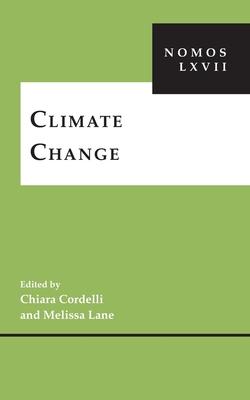
This volume focuses on three main questions surrounding the ethics and politics of climate change. The first concerns the limits of welfare economics, and of its utilitarian logic, as arguably still the dominant policy approach to climate change, and one which has loomed correspondingly large in intellectual approaches to the problem in many disciplines. Having a precise account of the limitations of welfare economics is necessary to develop not only new and more promising policy approaches, but also a more accurate account of our responsibilities towards existing and future generations.
The second question investigates the very nature of the problem of climate change. Is the latter better understood as a problem of economic inefficiency, distributive injustice, republican domination, or existential unfreedom? Can a diagnosis of climate injustice proceed independently of a critical analysis of the economic and power structures within which environmental harms are produced and reproduced?
Finally, there is the responsibility question. Which agents or entities (e.g. individuals, collectives, corporations, or structures) should be held morally responsible for climate change? To whom is such responsibility owed, e.g. existing people or not-yet-existing future generations? How should such responsibility, however attributed and distributed, be discharged, e.g. through a reduction of individual consumption, collective efforts at technological innovation, or by imposing immigration restrictions to limit population growth in high emitting countries?
Log in to write a review for this book.
No reviews yet. Be the first to share your opinion.
Biography not available.
Biography not available.