Eneze, Reuben Author
Biography not available.

Browse all FOLKLORE books
Browse all GARDENS books
Browse all GRAPHIC NOVELS books
Browse all HISTORY - MEDIEVAL books
Browse all HUMOUR books
Browse all Juvenile Fiction : Biographical - Other books
Browse all Juvenile Fiction : Historical - Other books
Browse all Juvenile Fiction : Legends, Myths, & Fables - Other books
Browse all Juvenile Fiction : People & Places - Other books
Browse all Juvenile Fiction : People & Places - United States - Other books
Browse all Juvenile Fiction : Religious - Other books
Browse all Juvenile Nonfiction : History - Other books
Browse all Juvenile Nonfiction : Mathematics - Advanced books
Browse all Juvenile Nonfiction : People & Places - Other books
Browse all Juvenile Nonfiction : People & Places - United States - Othe books
Browse all LITERARY STUDIES books
Browse all LONDON books
Browse all Medical : Nursing - Mental Health books
Browse all MIND books
Browse all MUSEOLOGY books
Browse all NON-CLASSIFIABLE books
Browse all NONLINEAR SCIENCE books
Browse all POPULAR SCIENCE books
Browse all RELIGIOUS STUDIES books
Browse all SPIRIT books
Browse all SPORT books
Browse all TRAVEL WRITING books
 Out of Stock
Paperback · ISBN 9781496967473
Inclusive of GST and other taxes
Arriving at your doorstep in 10-15 days
Our logisitcs team will make sure everyitem is delivered safely
| ISBN | 9781496967473 |
|---|---|
| Publisher | AuthorHouse |
| Publication date | January 2016 |
| Language | English |
| MRP | £16.95 GBP |
| Page count | 346 |
| Item weight | 76 g |
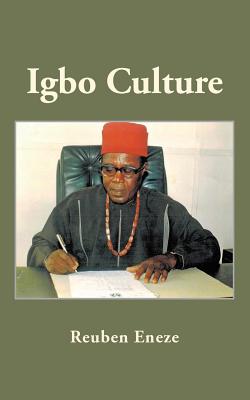
The author presented his book "Igbo Culture" in a most convincing way by quoting expert opinions on most of the issues he discussed in the book. Through his carefully researched work and detailed analysis of facts, he showed in the book that Igbo youths working hard like their ancestors can reform Igboland into a new and better civilization by sifting the good aspects of Igbo culture into today's way of life. He started his book by making a brief reference to the possible migration route of Igbo ancestors from their earliest settlements in the forest region of Central Africa to their present-day settlement in Southeastern Nigeria of West Africa. He also made a brief reference to the development of the Igbo civilization through the period covering the Stone Age and Iron Age civilizations (pages 1-14). He painted a clear picture of the cultural background of the community where he was born and brought up and lived in for more than sixty years before he traveled to the United States of America. He traced the more than twenty-six generations-deep lineages, beliefs, concepts, customs, and history of Ihe Shikeaguma in Ntuegbe clan of Enugu State in Southeastern Nigeria as a sample core Igbo culture community. He also delved into the historical links and social formation of this community, with emphasis on genealogy, religion, settlement, language, government, law enforcement, defense, seasons, festivals, and residential structures (pages 15-83). He took his readers to Igbo thought on God, self, family, human life, birth, death, spirit, human mind, and reincarnation (pages 85-113). He clearly documented the cultural products of Igbo thought, which can be seen in the formulation of Igbo institutions with special reference to marriage, the extended family system, the social status structure and title system, festivals, informal education, traditional law, community service, religion, divination, and health-care services (pages 114-202). He explained that the symbolism of various articles and some spoken words in Igbo culture are products of Igbo thought. He referred to ofo stick, kola nut, alligator pepper, spears, tribal face marks, body paint, white chalk, and the young palm frond as symbols or instruments of Igbo philosophical expressions and concepts (pages 203-214). He showed how Igbo culture and philosophy have been affected by the cultures of Igbo neighbors in Nigeria and by other foreign cultures with special references to the following: (a) Ugwuele civilization (a Stone Age culture)-1,000,000 BC-500,000 BC (b) Nri civilization (a ritualized kingship system)-AD 800-AD 1700 (c) Aro civilization (slave trade and colonial era)-AD 1700-AD 1850 (d) Border civilization (slave trade and colonial era)-AD 800-AD1900 (e) External civilization (slave trade and colonial era)-AD 1700-AD 2000 (pages 215-238) The author concluded his work by making an evaluation of Igbo culture. He carefully examined the oriented values of the Igbo and highlighted those areas of Igbo culture that should be refurbished and reinfused into Igbo life by the Igbo themselves in order to transform Igboland into a big theater of modern civilization (pages 239-246).
Log in to write a review for this book.
No reviews yet. Be the first to share your opinion.
Biography not available.