Polka, Brayton Author
Biography not available.

Browse all FOLKLORE books
Browse all GARDENS books
Browse all GRAPHIC NOVELS books
Browse all HISTORY - MEDIEVAL books
Browse all HUMOUR books
Browse all Juvenile Fiction : Biographical - Other books
Browse all Juvenile Fiction : Historical - Other books
Browse all Juvenile Fiction : Legends, Myths, & Fables - Other books
Browse all Juvenile Fiction : People & Places - Other books
Browse all Juvenile Fiction : People & Places - United States - Other books
Browse all Juvenile Fiction : Religious - Other books
Browse all Juvenile Nonfiction : History - Other books
Browse all Juvenile Nonfiction : Mathematics - Advanced books
Browse all Juvenile Nonfiction : People & Places - Other books
Browse all Juvenile Nonfiction : People & Places - United States - Othe books
Browse all LITERARY STUDIES books
Browse all LONDON books
Browse all Medical : Nursing - Mental Health books
Browse all MIND books
Browse all MUSEOLOGY books
Browse all NON-CLASSIFIABLE books
Browse all NONLINEAR SCIENCE books
Browse all POPULAR SCIENCE books
Browse all RELIGIOUS STUDIES books
Browse all SPIRIT books
Browse all SPORT books
Browse all TRAVEL WRITING books
 Out of Stock
Paperback · ISBN 9781498512503
Inclusive of GST and other taxes
Arriving at your doorstep in 10-15 days
Our logisitcs team will make sure everyitem is delivered safely
| ISBN | 9781498512503 |
|---|---|
| Publisher | Lexington Books |
| Publication date | April 2019 |
| Language | English |
| MRP | £39.99 GBP |
| Page count | 218 |
| Item weight | 72 g |
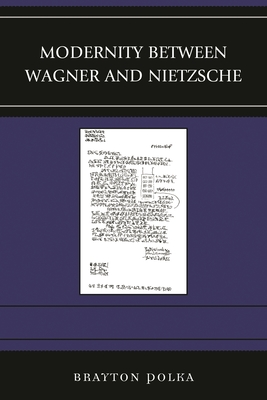
Modernity between Wagner and Nietzsche analyzes the operas and writings of Wagner in order to prove that the ideas on which they are based contradict and falsify the values that are fundamental to modernity. This book also analyzes the ideas that are central to the philosophy of Nietzsche, demonstrating that the values on the basis of which he breaks with Wagner and repudiates their common mentor, Schopenhauer, are those fundamental to modernity. Brayton Polka makes use of the critical distinction that Kierkegaard draws between Christianity and Christendom. Christianity represents what Nietzsche calls the faith that is presupposed in unconditionally willing the truth in saying yes to life. Christendom, in contrast, represents the bad faith of nihilism in saying no to life. Polka then shows that Wagner, in following Schopenhauer, represents Christendom with the demonstration in his operas that life is nothing but death and death is nothing but life. In other words, the purpose of the will for Wagner is to annihilate the will, since it is only in and through death that human beings are liberated from life as willfully sinful. Nietzsche, in contrast, is consistent with the biblical concept that existence is created from nothing, from nothing that is not made in the image of God, that any claim that the will can will not to will is contradictory and hence false. For not to will is, in truth, still to will nothing. There is then, Nietzsche shows, no escape from the will. Either human beings will the truth in saying yes to life as created from nothing, or in truly willing nothing, they say no to life in worshiping the God of Christendom who is dead.
Log in to write a review for this book.
No reviews yet. Be the first to share your opinion.
Biography not available.