No Contributor Author
Biography not available.

Browse all FOLKLORE books
Browse all GARDENS books
Browse all GRAPHIC NOVELS books
Browse all HISTORY - MEDIEVAL books
Browse all HUMOUR books
Browse all Juvenile Fiction : Biographical - Other books
Browse all Juvenile Fiction : Historical - Other books
Browse all Juvenile Fiction : Legends, Myths, & Fables - Other books
Browse all Juvenile Fiction : People & Places - Other books
Browse all Juvenile Fiction : People & Places - United States - Other books
Browse all Juvenile Fiction : Religious - Other books
Browse all Juvenile Nonfiction : History - Other books
Browse all Juvenile Nonfiction : Mathematics - Advanced books
Browse all Juvenile Nonfiction : People & Places - Other books
Browse all Juvenile Nonfiction : People & Places - United States - Othe books
Browse all LITERARY STUDIES books
Browse all LONDON books
Browse all Medical : Nursing - Mental Health books
Browse all MIND books
Browse all MUSEOLOGY books
Browse all NON-CLASSIFIABLE books
Browse all NONLINEAR SCIENCE books
Browse all POPULAR SCIENCE books
Browse all RELIGIOUS STUDIES books
Browse all SPIRIT books
Browse all SPORT books
Browse all TRAVEL WRITING books
 Out of Stock
Hardback · ISBN 9781501517884
Inclusive of GST and other taxes
Arriving at your doorstep in 10-15 days
Our logisitcs team will make sure everyitem is delivered safely
| ISBN | 9781501517884 |
|---|---|
| Publisher | Medieval Institute Publications |
| Publication date | January 2020 |
| Language | English |
| MRP | £123.00 GBP |
| Page count | 416 |
| Item weight | 167 g |
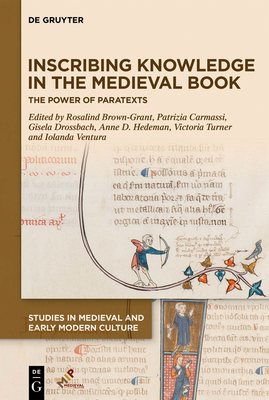
This collection of essays examines how the paratextual apparatus of medieval manuscripts both inscribes and expresses power relations between the producers and consumers of knowledge in this important period of intellectual history. It seeks to define which paratextual features - annotations, commentaries, corrections, glosses, images, prologues, rubrics, and titles - are common to manuscripts from different branches of medieval knowledge and how they function in any particular discipline. It reveals how these visual expressions of power that organize and compile thought on the written page are consciously applied, negotiated or resisted by authors, scribes, artists, patrons and readers. This collection, which brings together scholars from the history of the book, law, science, medicine, literature, art, philosophy and music, interrogates the role played by paratexts in establishing authority, constructing bodies of knowledge, promoting education, shaping reader response, and preserving or subverting tradition in medieval manuscript culture.
Log in to write a review for this book.
No reviews yet. Be the first to share your opinion.
Biography not available.