Castellani, Luca G Author
Biography not available.

Browse all FOLKLORE books
Browse all GARDENS books
Browse all GRAPHIC NOVELS books
Browse all HISTORY - MEDIEVAL books
Browse all HUMOUR books
Browse all Juvenile Fiction : Biographical - Other books
Browse all Juvenile Fiction : Historical - Other books
Browse all Juvenile Fiction : Legends, Myths, & Fables - Other books
Browse all Juvenile Fiction : People & Places - Other books
Browse all Juvenile Fiction : People & Places - United States - Other books
Browse all Juvenile Fiction : Religious - Other books
Browse all Juvenile Nonfiction : History - Other books
Browse all Juvenile Nonfiction : Mathematics - Advanced books
Browse all Juvenile Nonfiction : People & Places - Other books
Browse all Juvenile Nonfiction : People & Places - United States - Othe books
Browse all LITERARY STUDIES books
Browse all LONDON books
Browse all Medical : Nursing - Mental Health books
Browse all MIND books
Browse all MUSEOLOGY books
Browse all NON-CLASSIFIABLE books
Browse all NONLINEAR SCIENCE books
Browse all POPULAR SCIENCE books
Browse all RELIGIOUS STUDIES books
Browse all SPIRIT books
Browse all SPORT books
Browse all TRAVEL WRITING books
 Out of Stock
Hardback · ISBN 9781509937417
Inclusive of GST and other taxes
Arriving at your doorstep in 10-15 days
Our logisitcs team will make sure everyitem is delivered safely
| ISBN | 9781509937417 |
|---|---|
| Publisher | Hart Publishing |
| Publication date | September 2025 |
| Language | English |
| MRP | £95.00 GBP |
| Page count | 264 |
| Item weight | 121 g |
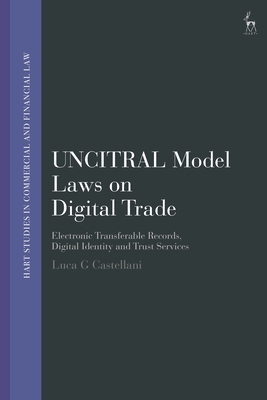
This book provides a detailed analysis of two UNCITRAL texts: the Model Law on Electronic Transferable Records (MLETR) and the Model Law on the Use and Cross-border Recognition of Identity Management and Trust Services (MLIT).
The MLETR is the legal tool that enables the use of trade documents such as bills of lading and promissory notes in electronic form. The book discusses core MLETR provisions such as those on scope of application, functional equivalence, and reliability standards. It illustrates national variations in enactment techniques and substantive content, including in France, Singapore, and the United Kingdom.
The MLIT provides the legal framework to manage identity management and trust services, including electronic signatures. The book explains the different approaches to giving legal recognition and effect to identity management and trust services, both domestically and across borders. It discusses the legal framework to accommodate functions and needs of identity management, describes trust services against the background of pre-existing UNCITRAL texts, and takes into account the revised EU eIDAS Regulation.
Providing an article-by-article commentary as well as an overview of implementation trends, the book is a fundamental resource for commercial, maritime and banking lawyers, digital economy policymakers, legislative drafters, supply chain management and paperless trade specialists, and for anyone interested in understanding the legal aspects of the transition from documents to data in trade.
Log in to write a review for this book.
No reviews yet. Be the first to share your opinion.
Biography not available.